
A deep dive into building a custom low-code platform for a health insurance CX provider, transforming complex JSON-based configuration workflows into a streamlined visual builder experience.
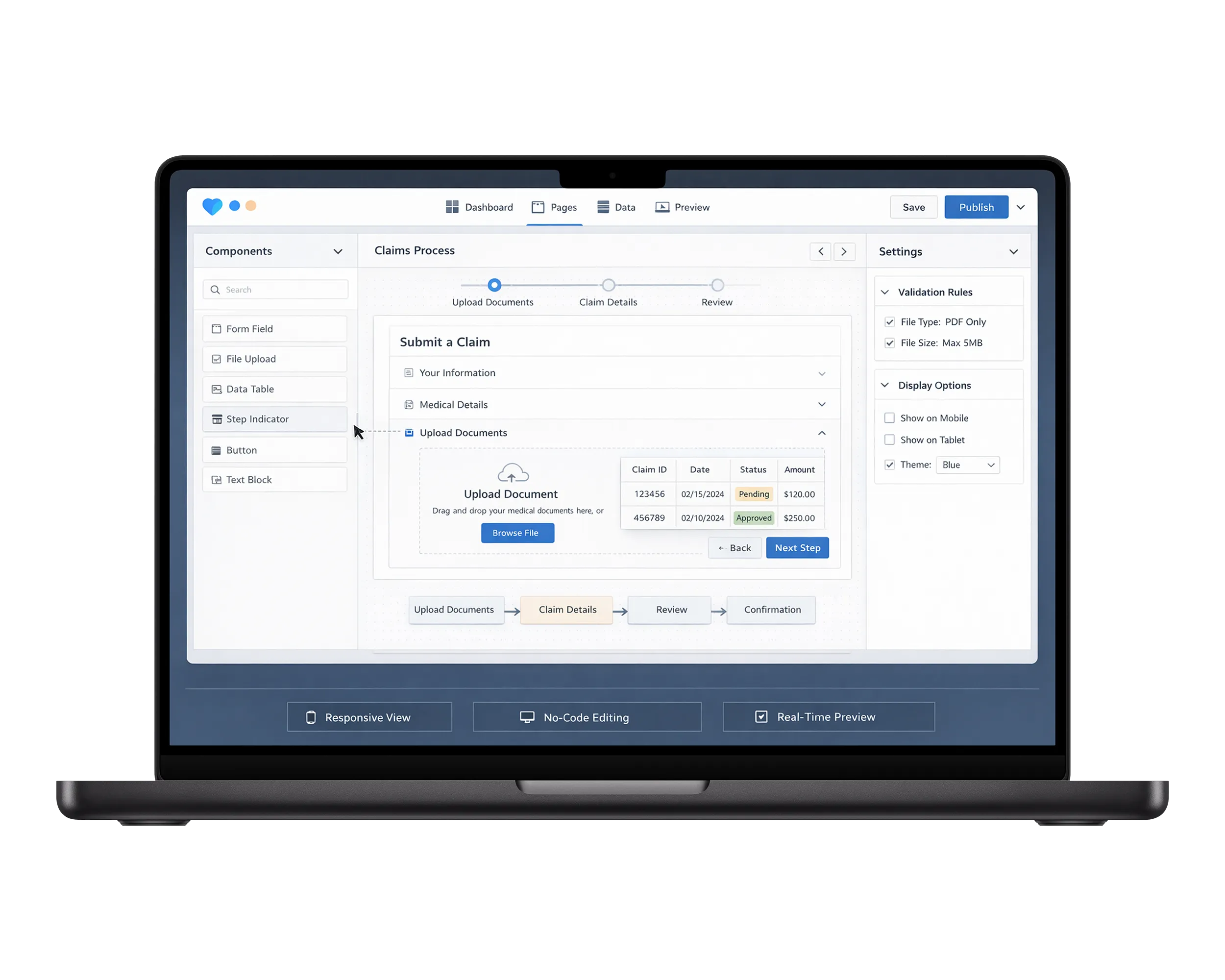
The client is a well-established American company developing a customer experience platform for health insurance. They provide their end users — hospitals, insurance companies, and healthcare organizations — with adaptive front-end solutions (responsive websites) to facilitate healthcare customer experiences.
Their clients can quickly spin up branded portals where policyholders create accounts, choose insurance plans, and manage payments. While their core platform was proven, they needed a fundamentally faster way to build and configure these applications internally.
The client approached us with a specific bottleneck: a legacy configuration system that made every application build painfully slow and developer-dependent.While their core insurance platform was robust and functioning, the surrounding configuration workflow relied on manual JSON editing. Even minor UI or content adjustments required senior developer involvement, creating a critical bottleneck across the organization. The process was slow, error-prone, and completely inaccessible to business users.
Furthermore, as a company serving demanding insurance clients, they faced a business-critical hurdle: application delivery was taking weeks instead of days. Sales teams waited on demo builds. Insurance clients waited on portal launches. Engineering capacity was consumed by repetitive configuration tasks instead of innovation. They needed a partner to build an internal low-code platform that would empower non-technical teams to configure and publish adaptive applications without touching code.
Before executing the build, we conducted a structured competitive and product capability analysis spanning 10 leading low-code/no-code platforms. We realized that the key to unlocking the client's potential wasn't altering their insurance platform, but bridging the gap between complex configuration requirements and business-user accessibility.
Our strategy focused on three pillars:
Replacing raw JSON editing with visual configuration blocks and reusable adaptive UI components. We reduced configuration steps by over 70% and designed intuitive drag-and-drop flows that immediately made application building accessible to non-technical teams.
Addressing the architectural limitations of the legacy system. We introduced modular architecture using Angular and NestJS, implemented a component-based rendering engine, and enabled dynamic runtime configuration to handle complex insurance domain logic efficiently.
Preparing the platform for commercial growth. We designed the system for multi-tenant insurance platforms, rapid white-label deployments, and future expansion into other regulated industries.

Frontend

Backend

Database

Cloud Infrastructure

Foundation
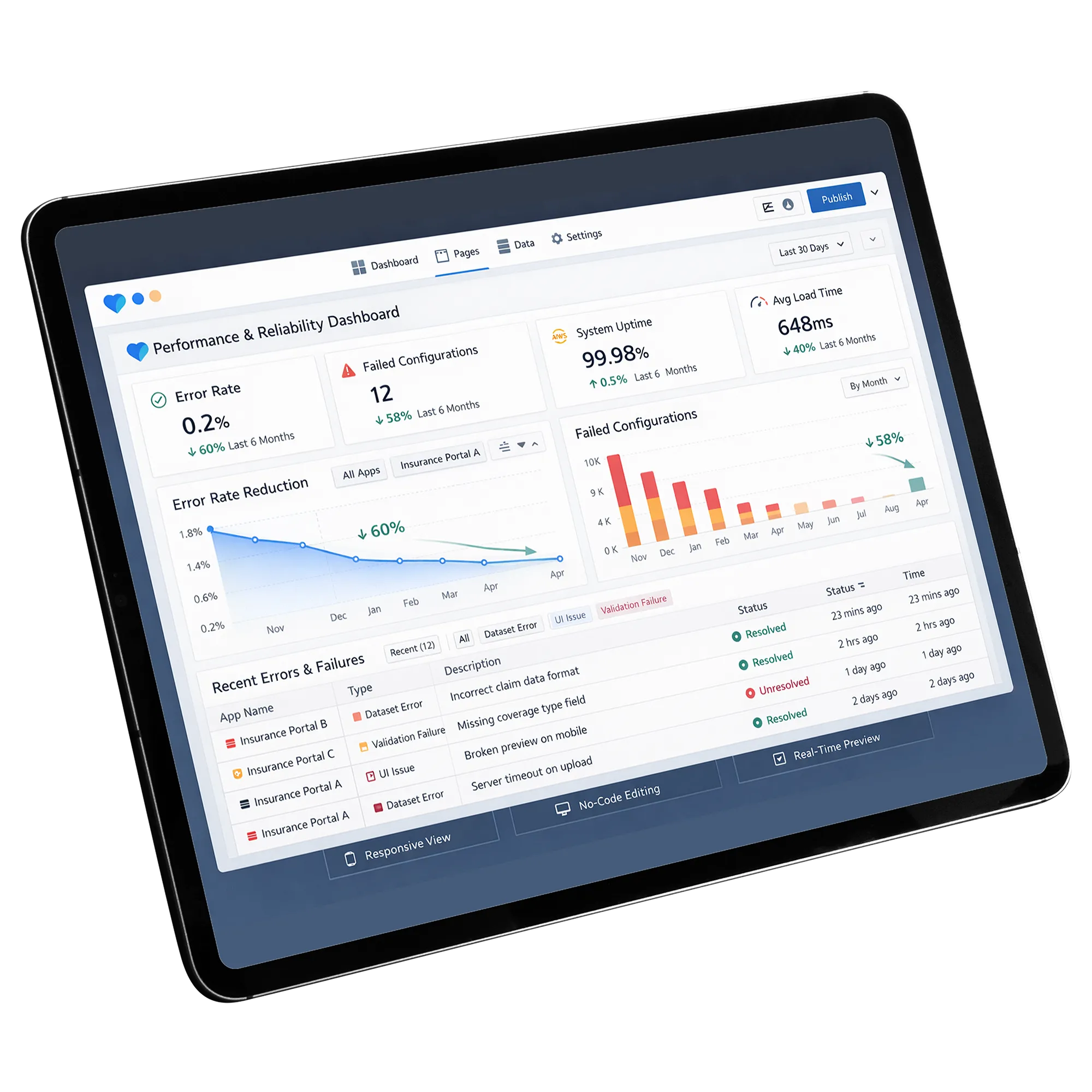
By replacing the client's legacy JSON configuration system with a streamlined visual builder, the platform became faster, more accessible, and operationally scalable. Efficiency gains were visible within 6 months.
The intuitive builder, combined with the elimination of manual configuration friction across the application delivery process, has resulted in a massive productivity spike for internal teams. The platform now handles adaptive application creation and deployment, setting a highly scalable foundation for the client's continued growth.
Designed the platform for multi-tenant insurance deployments and rapid white-label delivery, enabling frictionless expansion into new insurance clients and regulated industries.
Saved 85% of application configuration time and reduced engineering hours by 40%, freeing developer capacity from repetitive tasks to focus on innovation and product development.
Eliminated manual JSON errors and reduced configuration-related bugs by 60% through standardized architecture and a visual-first configuration approach.
Let's discuss how we can engineer your success in the insurance and healthcare industries.