







Access end-to-end fitness app development services. Choose the right product strategy, build the app, and ensure it drives measurable retention.
Deliver genuinely personalized fitness experiences at scale. AI-driven recommendations, adaptive programming, and intelligent coaching features differentiate platforms in a crowded fitness app market and justify premium pricing.
What you get:
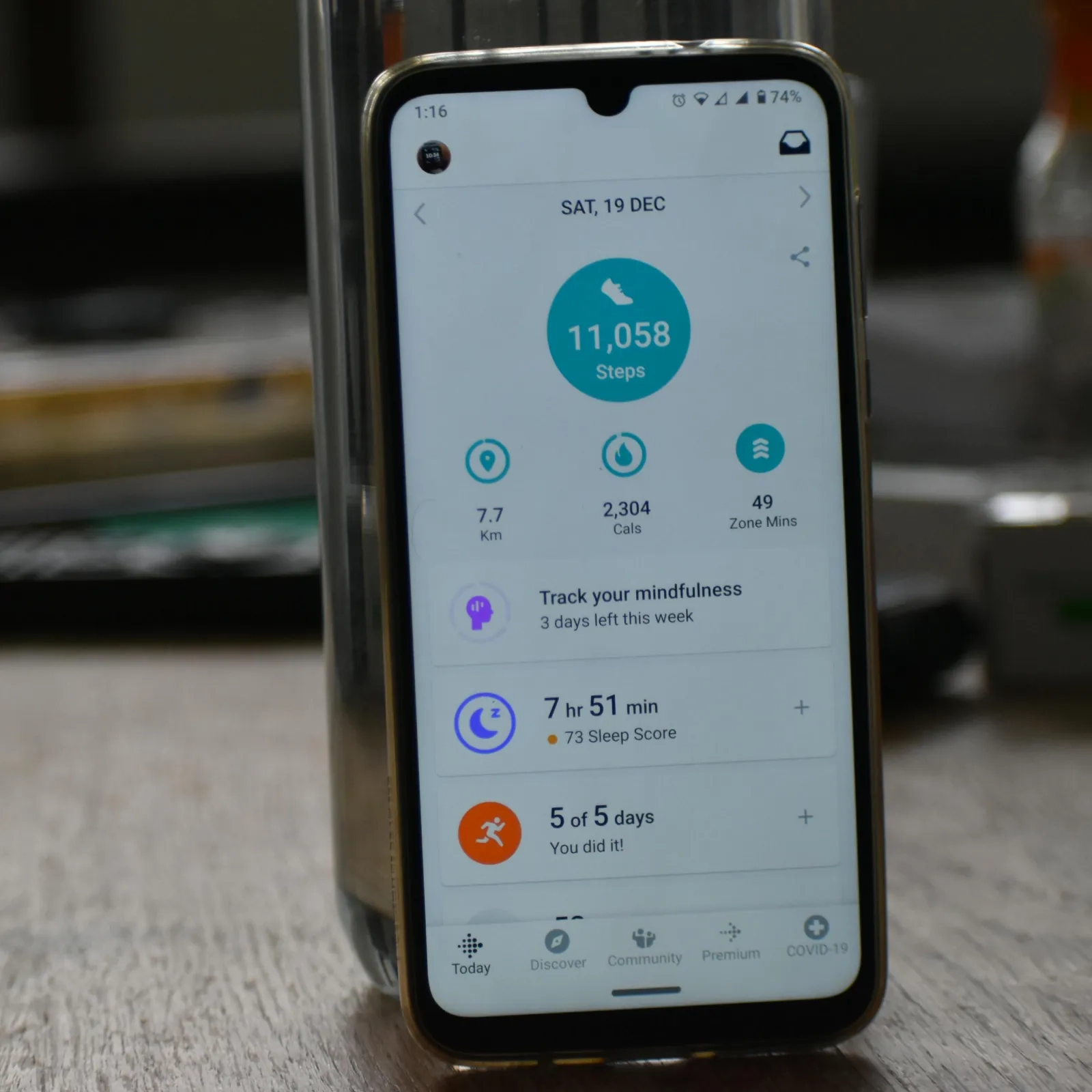
Give users a motivating picture of how their body performs every day. Real-time data from wearable devices and mobile sensors feeds dashboards that keep users engaged with their fitness journey and loyal to the platform.
What you get:
Complement physical training with a nutrition layer that ties food, hydration, and wellness habits to fitness goals. Platforms that address both body and mind retain users at significantly higher rates than workout-only solutions.
What you get:
Connect a fitness app to the hardware users already own. Seamless sync between mobile applications and smart equipment, sensors, and wearable devices creates a unified fitness platform — and a defensible competitive moat.
What you get:
Retention compounds when fitness becomes social. Build a platform where users share progress, challenge each other, and stay accountable — turning individual fitness journeys into community-driven engagement engines.
What you get:
Build a digital personal trainer that keeps users accountable between sessions. From guided workout plans to video libraries and AI-powered coaching, deliver a fitness experience that drives daily active use and long-term subscription revenue.
What you get:
Discover how fitness companies build apps that users return to daily, drive subscription revenue, and scale globally.
A cross-platform React Native app delivering personalized nutrition advice based on real-time data from a wearable glucose sensor. The app processes biometric data from the device, translates it into actionable dietary guidance, and presents it through an intuitive mobile interface. Built with React Native and UI Kitten, the solution handled full QA and cross-platform delivery for a market-ready fitness application in the health and nutrition space.
Partner with a team that builds fitness apps focused on user retention and measurable business outcomes.

Every feature decision is driven by one question: "Will users come back tomorrow?" Onboarding flows, notification logic, and progress visualization are engineered to reduce churn and build daily habits.

BLE connectivity, Apple Health sync, and third-party device APIs are treated as core infrastructure — not bolt-on features. Users expect their data to be unified. The product delivers it.

Accurate estimates that hold. Transparent process and communication ensure full visibility on progress, scope, and spend at every stage of the fitness app development process.

A single React Native codebase reaches iOS and Android simultaneously. No duplicated cost, no diverging feature sets, no delayed launches on one platform.

Architecture supports growth from early adopters to millions of active users — without costly rebuilds when the platform takes off.

User health data, payment information, and biometric records are protected by default. OWASP best practices, encrypted storage, and role-based access control are embedded from the first line of code.





Deep experience building for the full spectrum of the health and fitness industry.
AI-coached workout apps, trainer-client platforms, and adaptive programming tools for individual and group fitness.
Class scheduling, membership management, and booking systems that reduce admin overhead and improve member retention.
Calorie tracking, macro management, personalized meal planning, and barcode-scanning food logging for standalone or companion nutrition apps.
Companion apps for smart equipment, biosensors, and fitness trackers with real-time BLE data sync and multi-device support.
Guided session libraries, breathing tools, mood tracking, and mindfulness programs for mental wellness platforms.
Employee health and fitness platforms with organizational dashboards, challenge management, and aggregate analytics.
Progress tracking, exercise protocols, and clinical-grade data capture for physical therapy and recovery programs.
Lean, scalable fitness app foundations for early-stage health and wellness products targeting investor readiness and early user validation.
Technology selected to best serve long-term performance, wearable connectivity, and easy maintenance.


Collaborate in a way that suits the team structure and fitness app project maturity.
Get a full fitness app development team: product managers, UX designers, mobile engineers, and QA specialists. Ideal for scaling platforms and long-term feature development.
Best for: Scaling fitness platforms, long-term feature development.
Have a specific fitness app scope delivered from concept to launch. The team handles the full lifecycle from design to deployment.
Best for: MVPs, specific feature builds, app modernization.
Need React Native or wearable integration expertise? Add specialized engineers to an existing team to boost velocity.
Best for: Teams needing React Native or wearable integration expertise.
95% of our partners continue working with us beyond the initial scope and more than 70% stay with us for 2+ years.






Fitness app development costs in 2026 depend on complexity and scope. A focused MVP with core workout tracking runs $30,000–$80,000. A mid-range fitness app with wearable integration, nutrition tracking, and social features typically lands between $80,000–$200,000.
Custom fitness app development follows a structured process: discovery and requirements mapping, UX design and prototyping, frontend and backend development, wearable and third-party integrations, QA and performance testing, App Store and Google Play submission, and post-launch support.
A feature-equivalent nutrition and fitness tracking app with food databases, barcode scanning, macro tracking, and social features typically requires $120,000–$250,000 to develop from scratch. The database integrations, cross-platform mobile development, and user engagement infrastructure are the primary cost drivers.
Yes — fitness apps generate revenue through subscription models, in-app purchases, premium content unlocks, corporate wellness licensing, and marketplace features like connecting users with personal trainer apps. The global health and fitness app market continues to grow year over year.
Demand for health and fitness apps remains strong and continues to expand beyond traditional workout tracking into mental wellness, remote patient monitoring, corporate health, and connected fitness equipment. Behaviorally, users increasingly expect fitness apps to integrate with wearable devices, deliver personalized experiences, and support their full wellness journey — not just log steps.