
Submission intake
AI reads broker emails, portal uploads and attachments, classifies the line of business and appetite, and flags duplicates and clearance conflicts.
Underwriters still spend more than a third of their time on non-core work, fewer than half trust automated recommendations, and regulators in 24 states and DC now expect a written AI program. Here is what the data says, and where AI helps underwriters decide faster without taking the decision away from them.

Accenture's 2024 underwriting survey found that more than a third of an underwriter's time still goes to non-core work such as collecting data and administration.
The tools are part of the problem. Senior underwriting executives surveyed for Accenture's 2025 report named ineffective systems as their top challenge (65%), ahead of missing analytics (42%) and poorly organized information (40%).
Executives expect AI to reach the decision itself over time. In our experience, the fastest and lowest-risk gains come first from the work around it: reading submissions, extracting data, chasing missing information and preparing the case for the underwriter.

Capgemini's 2024 research across 18 markets shows that the problem is not effort but information: most insurers cannot evaluate risk completely or decide consistently.
Capgemini Research Institute, World Property and Casualty Insurance Report 2024. Top barriers named: data access (54%), legacy systems (51%) and lack of skilled talent (47%).
| Incomplete risk evaluation | 77% |
|---|---|
| Limited pricing accuracy | 73% |
| Inconsistent underwriting decisions | 70% |
AI works best as an assistant at each step of the workflow, with the underwriter keeping the decision and the authority. Pick a stage to see what AI does and which systems it needs.
AI reads broker emails, portal uploads and attachments, classifies the line of business and appetite, and flags duplicates and clearance conflicts.
AI turns ACORD applications, schedules of values, loss runs and financials into structured fields, each with a confidence score and a link to the source page.
AI checks the submission against underwriting guidelines and drafts the follow-up to the broker for the underwriter to approve.
AI attaches property, catastrophe, firmographic and other third-party data, where its use is lawful, to the submission.
Underwriters ask questions of manuals and authority letters and see similar past accounts with their outcomes.
AI prefills rating inputs, explains the gap between technical and quoted price and flags deviations from filed rates.
Cases above authority limits go to a senior underwriter with a ready case summary and recommendation. A person decides.
Every recommendation is logged with its inputs, model version and reviewer, which gives you the documentation regulators can request under the NAIC bulletin.
Drift and bias checks run on live decisions, and credit underwriting gets the specific adverse-action reasons Regulation B requires.
When the NAIC surveyed 194 large US home insurers in 2022–23, underwriting tied with marketing as the second most common place they used advanced AI and machine learning models, after claims.
NAIC Big Data and AI Working Group home insurer survey, analysis dated August 2023. Only more advanced AI/ML models were counted.
| Claims | 54% |
|---|---|
| Underwriting | 47% |
| Marketing | 47% |
| Fraud detection | 42% |
| Rating | 35% |
| Loss prevention | 14% |
Not sure where AI fits in your underwriting workflow?
We review your intake, policy admin and rating systems and show which step saves underwriters the most time.
About 24% of employed US insurance underwriters are 55 or older, close to the 23% across all US workers. As experienced underwriters retire, 76% of underwriting executives surveyed by Accenture expect AI to help pass their knowledge to new underwriters.
Current Population Survey 2025 averages, which exclude October. The BLS projects underwriter employment to fall 4% from 2025 to 2035, yet still expects about 6,800 openings a year.
| 20–24 | 2K |
|---|---|
| 25–34 | 40K |
| 35–44 | 32K |
| 45–54 | 33K |
| 55–64 | 23K |
| 65 and over | 11K |
Executives plan for heavy automation. Underwriters, regulators and production data suggest most AI will assist rather than decide for some time.
Evgeny Lupanov
Chief Technical Officer
Both are true, and the order matters. In our experience, insurers that start by automating decisions run into trust and compliance questions. Those that start with intake, extraction and case summaries give underwriters time back and build the data and audit trail that later automation needs.
Adopted in December 2023, it expects insurers to keep a written AI Systems program covering underwriting, rating and pricing, including models bought from vendors. 24 states and DC had adopted it as of April 2026.
Colorado's SB21-169 prohibits unfair discrimination through external consumer data, algorithms and predictive models. California, Colorado, New York and Texas also have their own insurance AI regulation or guidance.
Under Regulation B, an adverse action notice must state the principal reasons. Saying the applicant failed the creditor's scoring system is not enough.
Risk assessment and pricing of individuals in life and health insurance, and credit scoring of individuals, are high-risk uses. P&C and commercial lines are not on that list. After the AI Omnibus, these rules apply from 2 December 2027.
“Underwriters do not need a model that replaces their judgment. They need one that reads the submission, finds what is missing and shows where every number came from. Build that first, keep the underwriter as the decision maker and log everything. Automation of simple risks comes later, on top of data you can defend to a regulator.”
Neither is an underwriting project, but both involve the document handling, workflows and integrations an underwriting assistant needs.
1,500+ broker hours saved a year
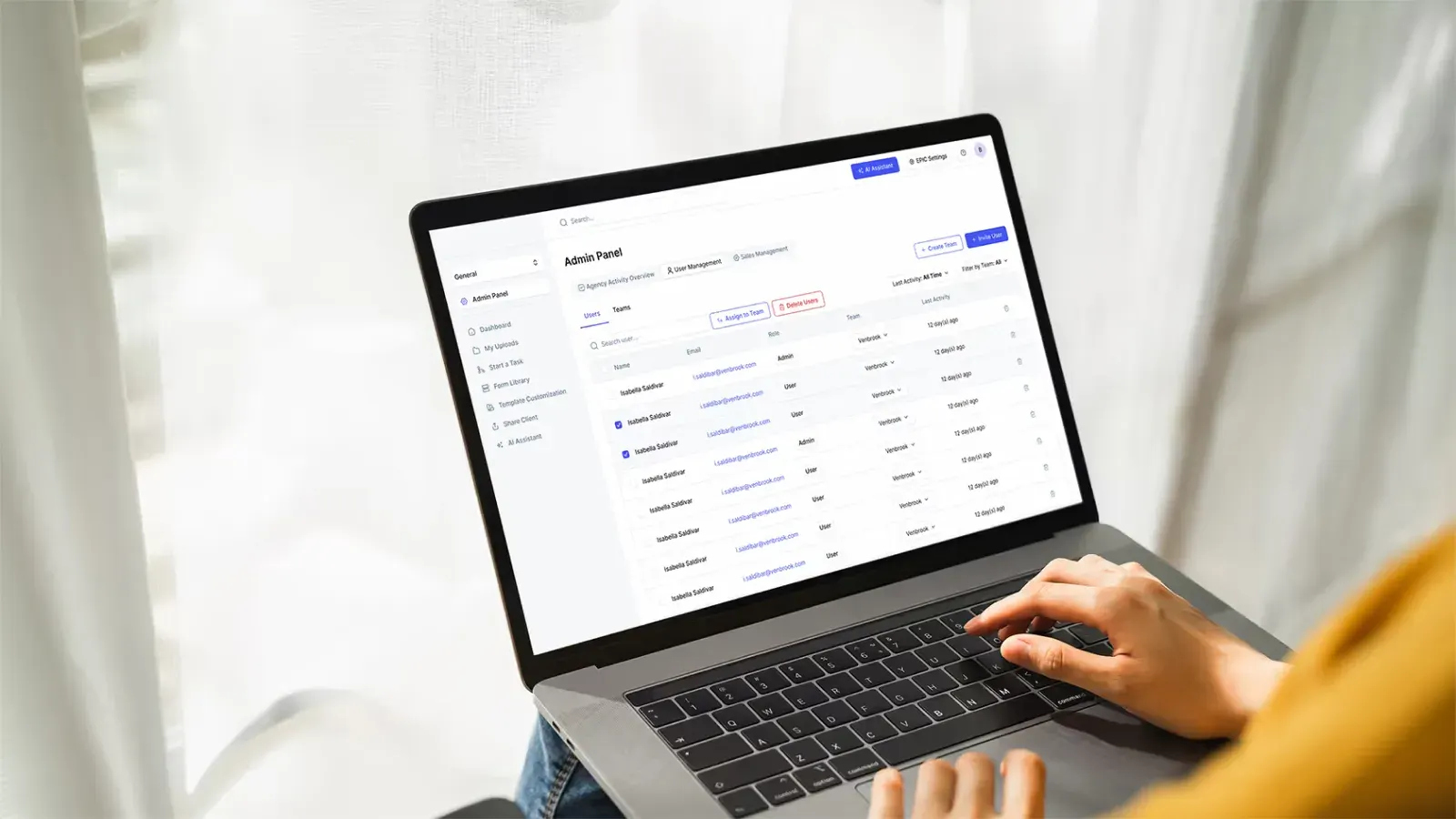
For an AI insurtech that automates quote comparison and proposals, we redesigned more than 10 core broker workflows around its AI engine and integrated payments, so brokers spend less time in the interface.
2 production platforms delivered
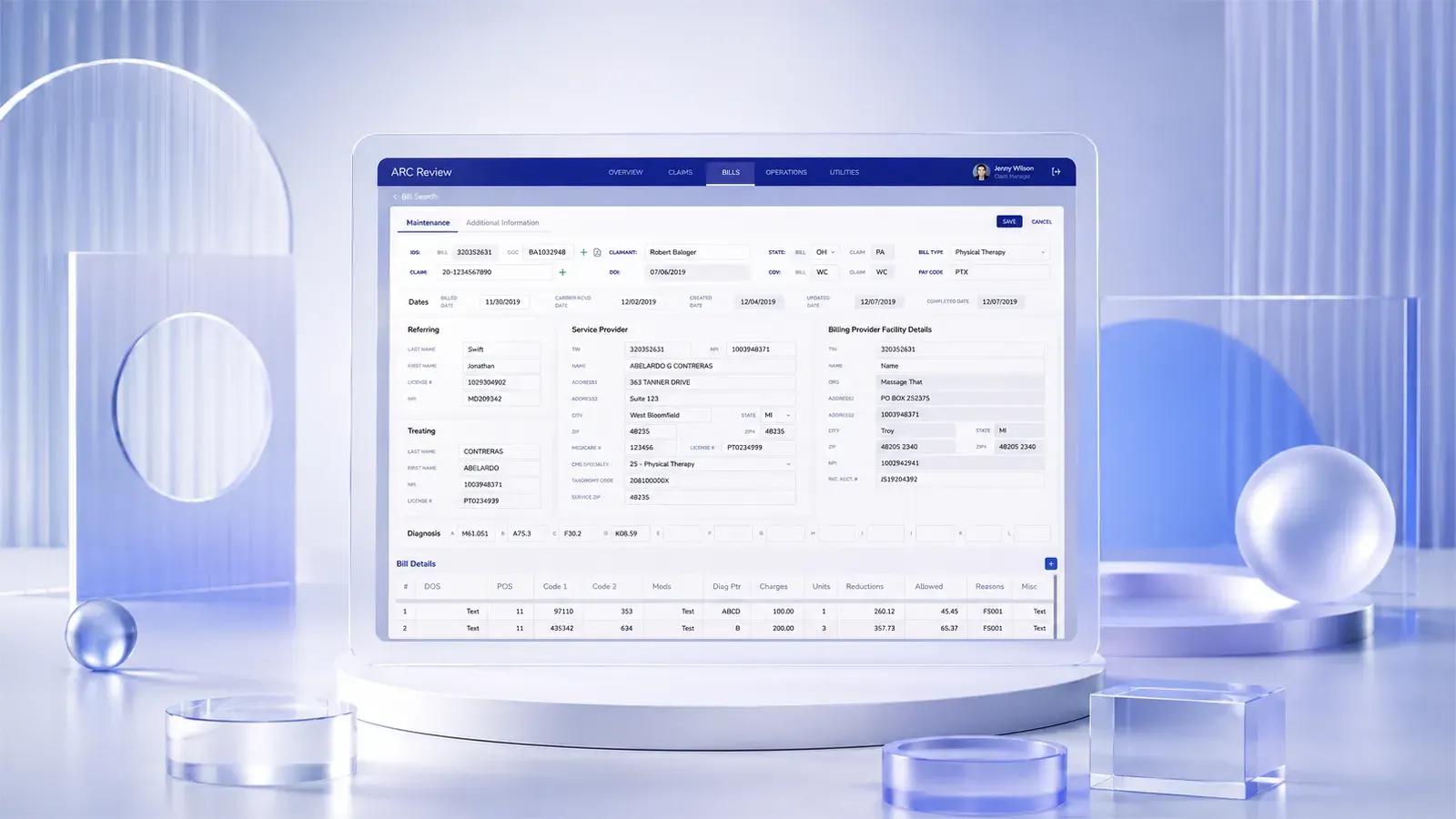
We built the ARC Review frontend, which automates medical bill review for casualty insurers, and the full ARC Finance payment system, delivered in 12 and 6 months.
Sources
Tell us about your lines of business, submission volumes and the systems your underwriters use. We will come back with the step where AI pays off fastest and a rough estimate.