Explore the full report about how artificial intelligence empowers educators, the value it brings for student outcomes, and the prospects of this technology for the global classroom.

The Industry Driven by Potential
AI Is Already Widely Used in Education
Key Market Drivers
Global Regional Insights
Why Does Edtech Need AI?
AI Adoption in Education: 2 Waves
AI Use Cases Across Education Sectors
Clear Benefits of AI for Educators
Services your AI-powered education project might need
AI-driven solutions we’ve already built
Industry Success Stories
AI Development Challenges and Practical Solutions
What's Next in EdTech AI?
Will AI Replace Teachers?
Why partner with Akveo?
Our engagement models
How we work?
Tech stack
Integrations we support
Connecting Across Industries
Education is built on three pillars: knowledge transfer, mentorship, and the unlocking of human potential. Like in no other field, the connection between teacher and student is the catalyst for success. However, the current landscape faces significant hurdles:
Educators rely on intuition and engagement to gauge understanding, as test scores rarely tell the whole story.
Learning paths are deeply personal, yet traditional systems force a one-size-fits-all pace.

Additionally, modern institutions face the challenges of the digital age: student data privacy (FERPA/COPPA), the need for hybrid learning models, administrative bloat, and the struggle to keep curriculum relevant in real-time.
The good news is that while the industry grapples with the digital divide, challenges in administration, grading, and personalization can be tackled with the capabilities of artificial intelligence.
.jpg)

AI gives a powerful set of tools to automate administrative grading, personalize curriculum delivery, reveal learning gaps in real-time, and give educators more time for what matters most: mentorship and inspiring students.
The global AI in education market is entering a period of explosive growth, driven by the demand for personalized learning and intelligent tutoring systems. (Grand View Research)
Market Size (2024)
Projected Size (2030)

Machine learning technology currently leads the market (holding 64.7% of the revenue share), powering adaptive education platforms that analyze student behavior patterns.
.svg)
60.1% of the market relies on cloud-based deployment, enabling seamless access to learning resources from anywhere — a necessity accelerated by the shift to hybrid models.
%201.svg)
While Higher Education holds the largest share (44.3%), the Corporate Training segment is projected to grow at the fastest rate as companies adopt AI to close employee skill gaps.
Adoption of AI in education varies by geography, influenced by government policy, technological infrastructure, and investment levels.
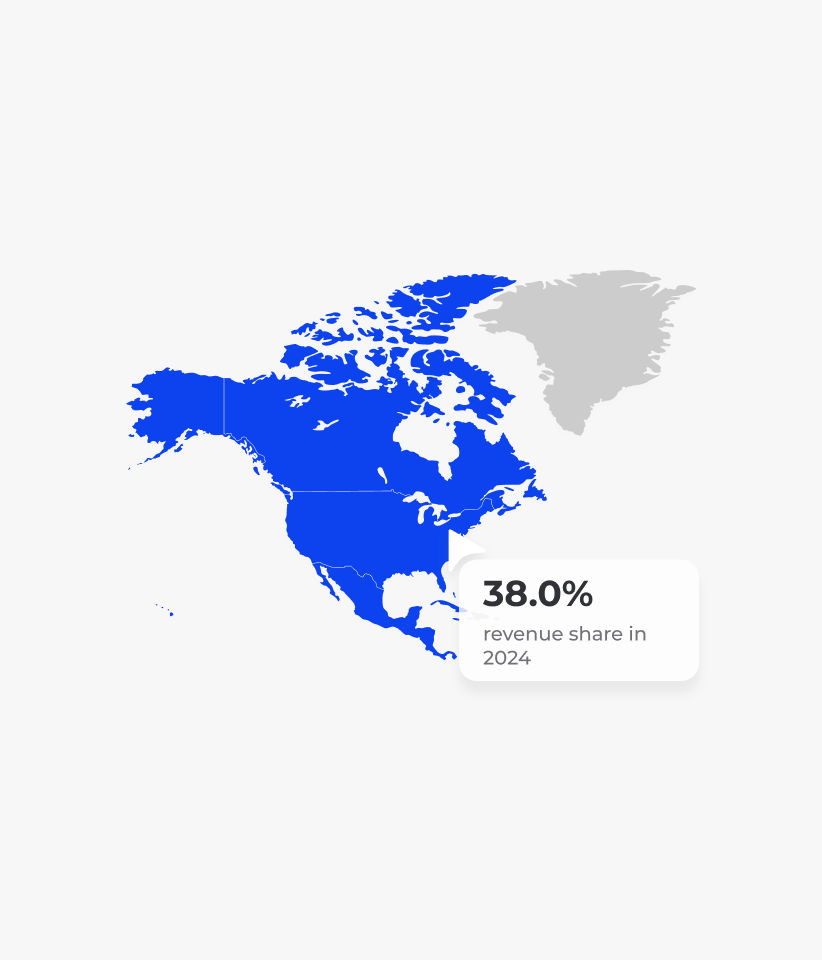

North America dominated the global landscape with a 38.0% revenue share in 2024. The growth is fueled by substantial investments from U.S. edtech giants and a strong focus on personalized learning solutions. The region is seeing rapid integration of AI for diagnostic imaging in research and advanced learning management systems in K-12.


This region is anticipated to register the fastest CAGR through 2030. China, India, and Japan are aggressively digitizing their education sectors. Government initiatives aimed at improving literacy and technical skills are driving the adoption of mobile-first AI learning platforms and smart classrooms.


Europe is witnessing significant growth driven by initiatives like the European Commission's Digital Education Action Plan. There is a strong push for intelligent tutoring systems and virtual learning environments across the EU, with a heavy emphasis on data privacy and ethical AI usage.
Artificial intelligence gives education powerful tools for data analysis and adaptive sequencing, which help make quantifiable improvements in retention and test scores. It functions by processing learning interaction data far beyond the scope of a single teacher's capability.
AI is also becoming essential because it addresses the most pressing operational pain points. Many of them come from the increasing difficulty of managing diverse classrooms and administrative expectations.
By applying AI, administrators relieve their faculty from work they were never supposed to do in such large amounts. Let’s look at these challenges.

The image of a teacher is one of patience. The reality is a high-pressure environment: excessive grading, lesson planning, and administrative reporting lead to high turnover. AI can alleviate the workload by automating repetitive tasks like record-keeping and assessment.
Traditional classrooms force students to learn at the same pace. Fast learners get bored; slower learners fall behind. It is impossible for one human to create 30 unique lesson plans daily. AI, however, excels at this, creating adaptive pathways for every individual.
Identifying a student at risk of dropping out often happens too late — after they have failed. AI can analyze attendance, participation, and submission patterns to flag at-risk students weeks before a crisis occurs.
Students with disabilities (visual, auditory, or learning differences) lack resources. AI-powered speech-to-text, text-to-speech, and simplification algorithms make learning materials accessible to everyone instantly.
Schools hold sensitive data on minors. Managing them securely while allowing for digital tools is difficult. AI-driven cybersecurity helps monitor threats and ensure compliance with regulations like FERPA and GDPR.
While the market is booming, adoption varies. However, the momentum is undeniable.
The most significant adoption has been in platforms that mimic one-on-one tutoring. Algorithms that adjust the difficulty of math problems or language exercises based on performance are now standard.

Educators and students are increasingly using GenAI (like ChatGPT) to assist in lesson planning, rubric generation, and research, shifting the focus from memorization to critical thinking.


Intelligent tutoring system developers
Language learning app providers
AI-driven content creation platforms
Adaptive learning assessment tools
Virtual assistants for students
Generative AI study aid makers

Learning materials, AI tools, and legacy systems don’t connect well with each other, making it hard for decision makers to manage data in one place.
When it takes too long to add new AI capabilities, support large language models, or launch in new markets, growth slows down, and competitors like Squirrel AI or Khan Academy get ahead.
If adapting instructional content feels hard, teachers get frustrated fast. Complicated lesson plans, tricky onboarding, or hard-to-find learning paths lead to churn – and bad reviews.
Student performance data doesn’t sync reliably with LMS or partner platforms, leading to delays, gaps, or incorrect data-driven insights.
Apps or platforms feel generic, fail to address individual learning styles, or are difficult for underserved students to use effectively.
Users try the product but stop using it due to a lack of personalized support, no instant feedback, or no added value to their learning outcomes over time.
Research Universities & Colleges
Online Degree Providers
Vocational & Technical Schools
Admissions & Enrollment Departments
Student Success Centers

Professors struggle to manage the grading process for hundreds of students, leaving little time to assist students personally or adjust teaching methods.
Institutions lack the data-driven insights needed to identify at-risk students early, which results in poor student performance and lost tuition revenue.
Critical student data is trapped in outdated on-premise servers that cannot integrate with modern AI-based systems or virtual assistants.
Ensuring instructional materials meet ADA standards for all learning styles is manual, slow, and prone to legal risks.
Enterprise HR Departments
Professional Certification Boards
Workforce Development Agencies
Sales Enablement Teams
Compliance Training Providers

Employees disengage from boring, linear slides that don't offer interactive learning experiences or adapt to their specific job roles.
It is difficult to accurately track if learning outcomes translate to job performance without real-time feedback mechanisms.
Keeping learning materials up to date with fast-changing industry standards is expensive and slow without AI-generated content.
Generic training fails to account for different human capabilities or individual learning styles, reducing ROI on training spend.
K-12 School Districts
NGOs & Education Charities
Public Libraries
Grant-funded Initiatives (e.g., US Department programs)
Special Education Departments

Tight budgets mean innovation teams must find cost-effective ways to bring AI capabilities to classrooms without expensive hardware.
Standard tools often fail to support underserved students who may lack reliable internet or need specialized, personalized tutoring.
Strict adherence to privacy laws (FERPA/COPPA) makes AI adoption difficult and slows down the educational process.
Admin-heavy workloads prevent educators from focusing on teaching methods, leading to high staff turnover.
Like in any other industry, adopting artificial intelligence for its own sake won't be of much value. We need to achieve tangible results that make life better for teachers, students, and administrators.

With AI, institutions can automate administrative tasks and grading to give educators back their most valuable resource: time. They can reinvest this time in complex problem-solving and emotional support.

Since a significant portion of vet stress comes from administrative overload and the fear of making a mistake, better workflows will become a safety net for diagnostics. AI can create a calmer and more sustainable work environment.

AI allows every student to have a unique curriculum tailored to their pace. Fast learners are challenged; those who need help get immediate reinforcement.

Optimizing inventory, reducing appointment no-shows, and freeing up staff to perform higher-value tasks directly improve the clinic's bottom line. The organization can continue to invest in the best people and technology.
At Akveo, we understand that educational institutions and edtech companies need more than smart algorithms. You need AI-driven solutions that prioritize student engagement and the privacy of student data while also improving the workflow for educators and the schools serving them.
You know how the learning process should evolve. We help you engineer it. Let’s talk through your vision, your objectives, and the best way to make education smarter.
In the education sector, the right technology can save teachers time, reduce admin overhead, and keep learners coming back. If you’re launching something new or fixing what’s slowing you down, we help you plan, build, and improve solutions.
We offer bespoke AI in education platform development, as well as custom learning apps and algorithmic tool creation. Our team makes sure it’s scalable, secure, and pedagogically sound.
What we cover:
Intelligent tutoring systems that adapt to individual learning styles
Generative AI tools for creating dynamic lesson plans and quizzes
Optical character recognition apps for digitizing handwritten notes
Comprehensive LMS platforms with built-in student engagement tracking
and other cases.
We help innovation teams and decision makers validate ideas and structure technical strategies. Your AI adoption will align with market needs and education sector regulations.
What we cover:
Technical feasibility audits for AI-driven solutions
FERPA and COPPA compliance strategies for student data
Roadmap design for integrating large language models
Selection of optimal educational technologies and stacks
and other cases.
We build rapid prototypes for edtech startups to validate learning concepts and secure funding. We focus on core value features that demonstrate artificial intelligence capabilities without over-engineering.
What we cover:
Proof-of-concept AI tools for investor demos
Core learning management features for pilot programs
Rapid student performance dashboards for early adopters
Scalable foundations ready for future software engineering growth
and other cases.
Need something live in weeks, not months? With Retool, UI Bakery, Appsmith, or Airtable, we can build apps quickly and cost-effectively. It’s great for testing ideas or solving internal bottlenecks.
What we cover:
Quick-to-build student data dashboards
Internal portals for admissions or administrative tasks
Automated reminders, follow-ups, or consistent feedback loops
Connecting your low-code app to LMS, SIS, or payment platforms
and other cases.
Let's move your critical educational content and data from legacy on-premise systems to modern, secure cloud environments. We ensure zero data loss during the transition.
What we cover:
Migrating student data records to secure cloud vaults
Transferring learning materials from legacy LMS to modern platforms
Database consolidation for unified data-driven insights
Transitioning to microservices for better AI model integration
and other cases.
We refactor and upgrade existing applications to improve performance, security, and the ability to handle new AI capabilities. Your technical debt turns into technical assets.
What we cover:
Optimizing codebases to support real-time feedback features
API refactoring for better mobile and web performance
Upgrading security protocols for education tools
Preparing architecture for adaptive learning algorithms
and other cases.
We design and manage the cloud architecture needed to run resource-intensive AI algorithms and large language models efficiently and cost-effectively.
What we cover:
AWS/Azure/GCP setup for scalable AI-driven content creation
Cost optimization for high-traffic learning platforms
Auto-scaling configuration for exam periods
Secure environments for sensitive student data
and other cases.
At our in-house UX studio, we design intuitive, accessible interfaces that support underserved students and different learning styles. The focus is always on reducing friction to maximize student engagement.
What we cover:
Accessible (WCAG-compliant) designs for interactive learning experiences
Dashboards that visualize learning outcomes clearly
Mobile-first interfaces for language learning apps
User flow optimization for complex grading processes
and other cases.
We rigorously test AI and machine learning systems for bias, accuracy, and load capacity. We ensure your AI tools provide accurate assistance to students without hallucinations or errors.
What we cover:
Bias testing in AI-generated content
Load testing for concurrent user spikes during exams
Security audits for student data protection
Automated testing for adaptive assessments
and other cases.
We connect your disparate systems — LMS, SIS, Payment, and AI technology — so they function as one unified ecosystem, reducing manual administrative tasks.
What we cover:
Integrating AI tutoring bots into LMS platforms
Connecting virtual classrooms (Zoom/Teams) with attendance systems
Syncing grading process data with Student Information Systems
API connections for third-party educational content
and other cases.
We stay with you after launch to ensure stability, handle updates, and refine AI models based on real-world usage and student feedback.
What we cover:
24/7 monitoring of learning platform uptime
Regular updates to AI algorithms and models
Bug fixes and performance tuning
Feature expansion based on learning patterns
and other cases.
See how our bespoke AI in edtech development services helped businesses launch new products, streamline operations, and connect their systems.
Skrivanek Group needed to move beyond standard tutoring to create a platform that enables users to practice reading, writing, and speaking across 30+ languages.
We built an AI-powered SaaS with a custom learning assistant using OpenAI and Next.js, integrating secure user management via Clerk and subscription plans via Stripe.
Result: a scalable platform offering personalized learning experiences that adapts exercises to the user's level.

A US Coaching Start-up needed a better way to set and track goals, wanting a tool that felt like a human coach but operated as a scalable web app.
We built a progressive web app with an AI coach using Next.js and LangGraph that splits broad goals into actionable milestones and sends push notifications to assist students and users.
Result: 50% faster task execution and an efficient cross-device experience.

The Factory Intelligence Platform faced a challenge where operators were drowning in data, struggling to access real-time telemetry or documentation.
We developed Factory Copilot, an AI chatbot integrated into their platform using Azure OpenAI and Angular that parses SQL databases and PDF documents using natural language processing.
Result: 50% faster data retrieval, reduced dependency on IT, and instant access to configuration guides.

In this project, plant managers and line operators struggled to get even basic production data without going through IT. They decided to get ahead with AI software development services, and that was the best possible solution. For them, we developed Factory Copilot, an AI chatbot that connects directly to ERP and MES systems, allowing users to ask plain-language questions and get instant answers. No training, no dashboards, no delays. The result: faster decision-making, fewer bottlenecks, and a clear drop in time wasted chasing reports.
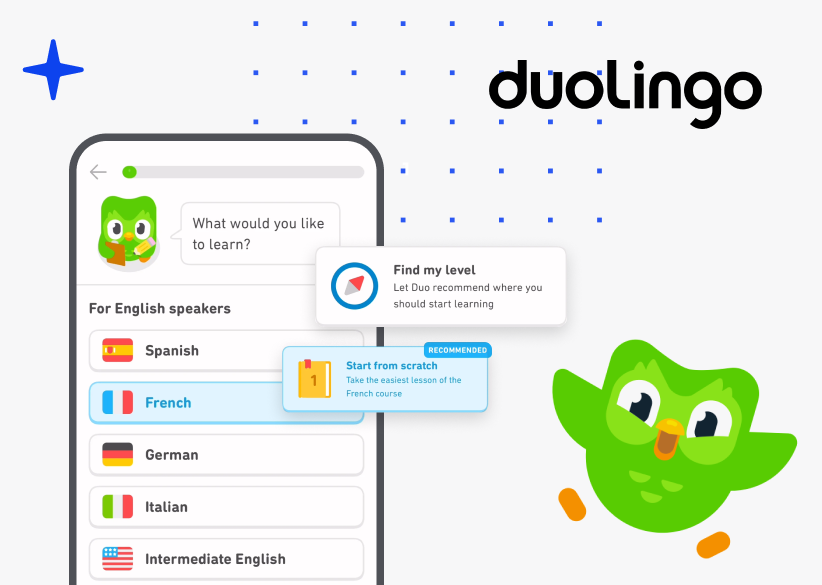
Uses generative AI and voice processors for role-play in real time. A user is offered to talk to a buddy during a phone conversation. The character asks questions and reacts to answers instantly. This way, learners get a nearly offline experience of talking to a person in the language they are learning.
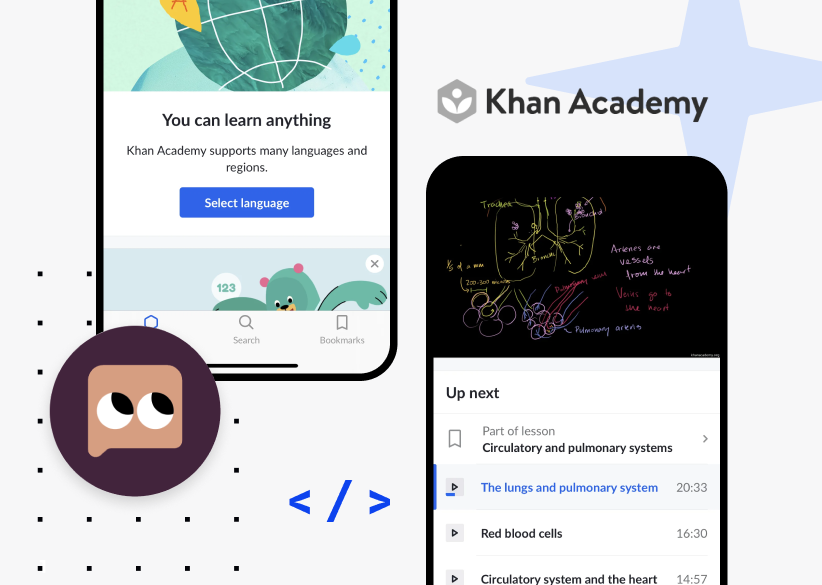
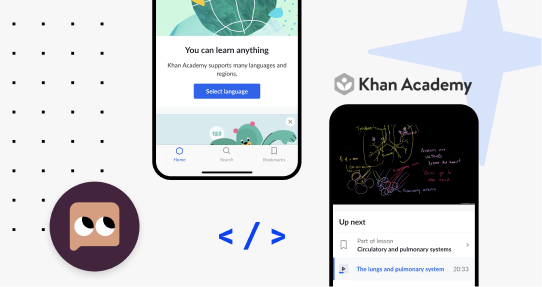
An AI guide that acts as a tutor for students and a teaching assistant for teachers. Powered by LLMs, it ensures students figure out the answer themselves via Socratic questioning rather than just being told.
Although AI simplifies educators' work in many ways, implementing it is not simple. There are real challenges to adoption, but each has a practical solution.
.svg)
Problem: Custom AI development or purchasing high-end systems seems prohibitively expensive for a small district or startup.
Solution: Start small and prove the value. Begin with a low-code prototype or a pilot project solving one high-impact problem (like automated FAQ bots) before committing to large-scale development.
%201.svg)
Problem: AI needs data, but student data is protected by strict laws (FERPA, COPPA).
Solution: Adopt Privacy by Design. Ensure data is anonymized before processing and work with developers who understand compliance standards. Never train public AI models on private student data.
%201.svg)
Problem: A new AI tool is useless if it doesn't "talk" to your LMS (Canvas/Moodle) or SIS.
Solution: Prioritize solutions built on modern APIs and LTI standards. A good development partner will design the AI to fit into your existing workflow, not force you to change everything you do.
The field is moving fast. These key trends will shape the future of education over the next few years.
AI will move beyond semester-based tracking. Future systems will track a learner's portfolio from K-12 through their corporate career, suggesting skills and micro-credentials based on job market trends.
Generative AI will create virtual reality environments on the fly. A history student could ask to "visit Rome in 100 AD,"and an AI will render a historical simulation right away for immersive study.
AI-based systems that can detect frustration or confusion via webcam and adjust the lesson tone to be more encouraging or offer a break, bringing emotional intelligence to digital learning.

Spoiler

The answer is an unequivocal no. AI will not replace teachers and human capabilities for the same reason a calculator did not replace mathematicians. It is a powerful tool that augments human expertise; it does not replace it.
AI handles content. Teachers handle context
AI can teach the formula for gravity, but a teacher explains why it matters to the universe and sparks curiosity.
AI lacks empathy
A machine cannot understand that a student is failing because of bullying or home issues.
People need human connection
Education is a social endeavor. Mentorship requires a human bond.
AI will change the job of a teacher, but it will not take it. It will handle the repetitive, data-intensive tasks, freeing up educators to practice at the top of their license: to be mentors, motivators, and compassionate guides.
For the past decade, we have engineered the mission-critical software that businesses depend on daily — back-office systems, immersive learning experiences, and more.
Today, we channel that technical heritage into reshaping education, assisting schools, innovation teams, and startups in crafting AI-driven solutions that address genuine challenges in the learning landscape.


From European language learning apps to grant-backed initiatives for the US Department, we empower edtech companies to deploy platforms that capture market share, attract venture capital, and expand their user footprint fast.
We go beyond code to understand the nuances of teaching methods and individual learning styles. We know how to build technology that protects student data (FERPA/COPPA compliant) and effectively supports underserved students at the same time.
We possess deep experience with ecosystem staples like Canvas, Moodle, and Pearson, alongside modern tech like OpenAI and Stripe. We ensure your solution integrates with the critical education tools your institution relies on.
By leveraging generative AI accelerators and cross-platform frameworks like React Native, we can cut development schedules by up to 25%, helping you launch faster without compromising on stability.
We architect scalable foundations capable of supporting resource-heavy large language models and evolving AI capabilities. Your platform grows without expensive re-engineering.
We design platforms that adhere to rigorous education sector standards, ensuring your architecture supports unbiased AI systems and secure, regulatory-compliant storage of sensitive information.
No two educational initiatives are identical, and neither are our partnerships. We maintain adaptable engagement structures to ensure you receive the precise level of collaboration and control your situation demands.

A full team of our specialists working exclusively on your project as an extension of your in-house team.
Best for:
Large-scale development
Multi-phase projects
Companies without in-house tech teams.

Pay only for the actual work done. You get flexibility, control, and transparent tracking of hours and deliverables.
Best for:
Evolving projects
Prototyping
Work that needs adaptability

Ongoing technical assistance, updates, and improvements for your existing product.
Best for:
Post-launch maintenance
Product optimization
Continuous improvements
Our methodology is transparent, cooperative, and engineered to ensure full visibility — so you always understand the status of development and the rationale behind our technical decisions.
We start by getting to know your business, your goals, and your users. This is where we ask questions, review your current tools, and map out the features that will make the biggest impact.
Our team works on everything your project needs – from user-friendly designs to clean, scalable code and integrations. You’ll see progress regularly and can give feedback anytime.
We test thoroughly to make sure everything works as it should – fixing, fine-tuning, and polishing before launch.
We handle the launch so it’s smooth and stress-free, then stay available for updates, improvements, and ongoing support whenever you need us.
We pick models, frameworks, and tools that actually match your goals, work with your data, and scale with your educational business.








We connect your systems so they work as one. No double data entry, faster service for clients, and better outcomes for learners.


For:
Course delivery
Learning materials distribution
Grading process
Student engagement tracking
Assignment submission

For:
Student data management
Attendance tracking
Transcripts & scheduling
Demographic reporting
Administrative tasks

For:
Adaptive assessments
Plagiarism detection
Secure testing environments
Student performance analytics

For:
Remote instruction
Interactive learning experiences
Webinars
Virtual office hours

For:
Digital textbooks
Instructional materials
AI-generated content integration
Curriculum alignment
For:
Student recruitment
Alumni engagement
Campaign automation
Institutional communication
.webp)
Your education systems operate within a broader digital landscape, not a vacuum. We take advantage of our diverse software engineering background to bridge the gap, connecting your platform with essential tools from other industries:
.png)






The team provides regular progress updates, showcases excellent time management, and communicates smoothly through in-person and virtual meetings. Their ability to understand needs and set realistic expectations has impressed the client.

CSO, Skrivanek
It`s already my second engagement of Akveo. Akveo is a straightforward company. They’re open for discussion, have innovative solutions, and they understand how to use and leverage them on the market and investing a lot in great open source products.

Head of Telematics & Connectivity, Erwin Hymer Group
Our cooperation with Akveo is the reliable foundation for delivering high quality solutions for our partners. Proactive mutual conversations on various topics around business, technology and innovation always bring fruitful opportunities for a strong long-term relationship.

CEO, Swiss Startup Tech
They take care about what customer asks and they always try to give him attention and results. Even if, as in our case, the customer does not ask a "standard project" but only consultancy and support. Thanks to Akveo's outstanding consultancy services, the company will be able to launch its apps soon.

CTO, MySolution
The team of Akveo handled both the front-end and back-end parts. Weekly meetings allowed us to stay on the same page regarding the overall progress, and daily syncs helped us resolve issues faster. Our team was impressed by their knowledge and expertise. For instance, when I gave them a task for investigating, they came up with an optimal solution in terms of cost and quality efficiency.

Managing Director, Astute Computer Consulting
We really appreciate Akveo level of detail and the accountability they have demonstrated on the project. As well as their efficient customer service, their willingness to accommodate our need for occasional requests and the way they conducted the business as a whole.

Business Development Consultant, CWBI
Akveo is willing to continuously communicate about and evaluate the quality and delivery of their own team members, working with us to ensure that everyone is delivering to our satisfaction. They will work with us to replace team members as needed, and work with our team members on the UI side as well, effectively integrating them into their team.

Chief Information Officer, Accuro Solutions
Our business has expanded thanks to Akveo’s high-end services! Their contribution has exceeded our initial requirements. Being solution-oriented, Akveo's team establishes strong partnership relations to bring their clients tangible benefits. They always suggest innovative solutions, and remain open to any discussion.

Principal Consultant, Velum Management
Have an AI in edtech project in mind? Let’s talk it through. We’ll help you figure out the best way to build it, make it work, and get it into your users’ hands.

We offer complimentary expert consultations on the best business automation approaches.