
Meeting notes to CRM
With client consent, AI transcribes the meeting, summarizes it, extracts action items, drafts the follow-up email and writes the note back to the CRM. Morgan Stanley's Debrief tool works this way and saves notes into Salesforce.
Advisors spend most of their day away from clients, more than a third of them plan to retire within a decade, and most wealthy clients expect their firm to use AI. Here is what the latest data says, where AI already takes work off advisors and what regulators have said about it.

The Census Bureau asks US employers every two weeks whether they used AI in any business function. In finance and insurance, a sector that includes banks, insurers and investment firms, the share rose from about 30% to about 40%, and 43% expect to use AI within six months.
The first two-week survey period starting in each month. Standard errors are about 1.2–2.5 points. Since late 2025 the survey question refers to AI as "super intelligence (formerly AI)".
| Nov '25 | 29.9% |
|---|---|
| Dec '25 | 30.5% |
| Jan '26 | 31.7% |
| Feb '26 | 29.6% |
| Mar '26 | 34.1% |
| Apr '26 | 33.9% |
| May '26 | 35.7% |
| Jun '26 | 34.3% |
| Jul '26 | 36.8% |
| Aug '26 | 36.5% |
| Sep '26 | 40.1% |
| Oct '26 | 39.2% |
Fidelity's 2025 Advisor Insights Study found that 59% of advisor time goes to administration, compliance and other non-client tasks. In an earlier Fidelity study, only 27% of advisors said they spend their time at work on high-value activities.
Hiring alone will not close the gap. The Bureau of Labor Statistics projects advisor employment to grow just 1% from 2025 to 2035, with about 17,100 openings a year mostly replacing people who leave, while Cerulli counts 105,887 advisors who plan to retire in the next decade.
Deloitte projects that by 2032 AI could free 25–50% of adviser time from lower-value operational work. It is a model, not a measured result, but it shows where the opportunity sits: in the workflow around the advice, not in the advice itself.

Most value today comes from removing the work around each client interaction. Pick an area to see where AI fits and which systems it needs.
With client consent, AI transcribes the meeting, summarizes it, extracts action items, drafts the follow-up email and writes the note back to the CRM. Morgan Stanley's Debrief tool works this way and saves notes into Salesforce.
Before each review, AI builds a one-page brief from the CRM (Salesforce Financial Services Cloud, Wealthbox or Redtail), custodian positions, portfolio accounting such as Orion or Addepar, and past notes.
AI spots money-in-motion events such as liquidity, inheritance or held-away assets and suggests which clients to call first.
AI explains drift against the investment policy and drafts the review commentary. The advisor approves every recommendation.
AI flags tax-loss harvesting opportunities and concentrated positions from lot-level cost basis data.
An assistant answers routine questions about balances, transfers and distributions from custodian data, and hands anything else to a person.
AI extracts data from statements, IDs, trust documents and transfer forms and pre-fills account opening.
AI sorts the service inbox, answers status questions and routes requests to the right team.
AI checks marketing drafts against the firm's policies and the SEC Marketing Rule before a compliance officer reviews them.
AI reviews email and chat archived in tools such as Smarsh or Global Relay and surfaces the exceptions supervisors need to see.
J.D. Power's 2026 study of 4,503 employee and independent advisors at US broker-dealers shows active AI use rising sharply in one year, with independent advisors still well behind.
Advisors who find their firm's AI tools effective report higher satisfaction: 781 points against a 632 average for employee advisors, and 826 against 688 for independents.
| Employee advisors, 2026 | 73% |
|---|---|
| Employee advisors, 2025 | 44% |
| Independent advisors, 2026 | 42% |
| Independent advisors, 2025 | 19% |
Not sure which workflow to automate first?
We map your CRM, custodian and compliance stack and show which AI use case saves advisor time fastest.
Clients say they expect AI, and many say they would trust it. The same surveys show that advisors and clients still see trust as a human job.
Evgeny Lupanov
Chief Technical Officer
Both are true, and they point the same way. Clients do not want a chatbot instead of their advisor. They want an advisor who answers faster, knows their file and has time to think. That is what AI should buy back: hours spent on notes, prep and paperwork, returned to the client relationship.
In June 2025 the SEC withdrew its proposed rule on predictive data analytics and said any future action would need a new proposal. In practice, firms apply their existing fiduciary, supervision and recordkeeping obligations to AI tools.
The SEC's fiscal 2027 examination priorities list emerging technologies, including what the SEC now calls super intelligence, among the areas its examiners will focus on.
FINRA's 2026 oversight report says summarization and information extraction is the top generative AI use at member firms, and flags agents acting without human validation as a key risk.
Get client consent, check state call-recording laws, keep transcripts and notes in the books-and-records archive and review them like any other client communication.
“In wealth management the model is the easy part. The work is connecting it to the CRM, the custodian feeds and the compliance archive, and keeping every number it shows traceable to the source. Start with meeting notes or client briefs, measure the hours saved per advisor, then move closer to advice.”
Akveo builds AI and data platforms for fintech and investment firms.
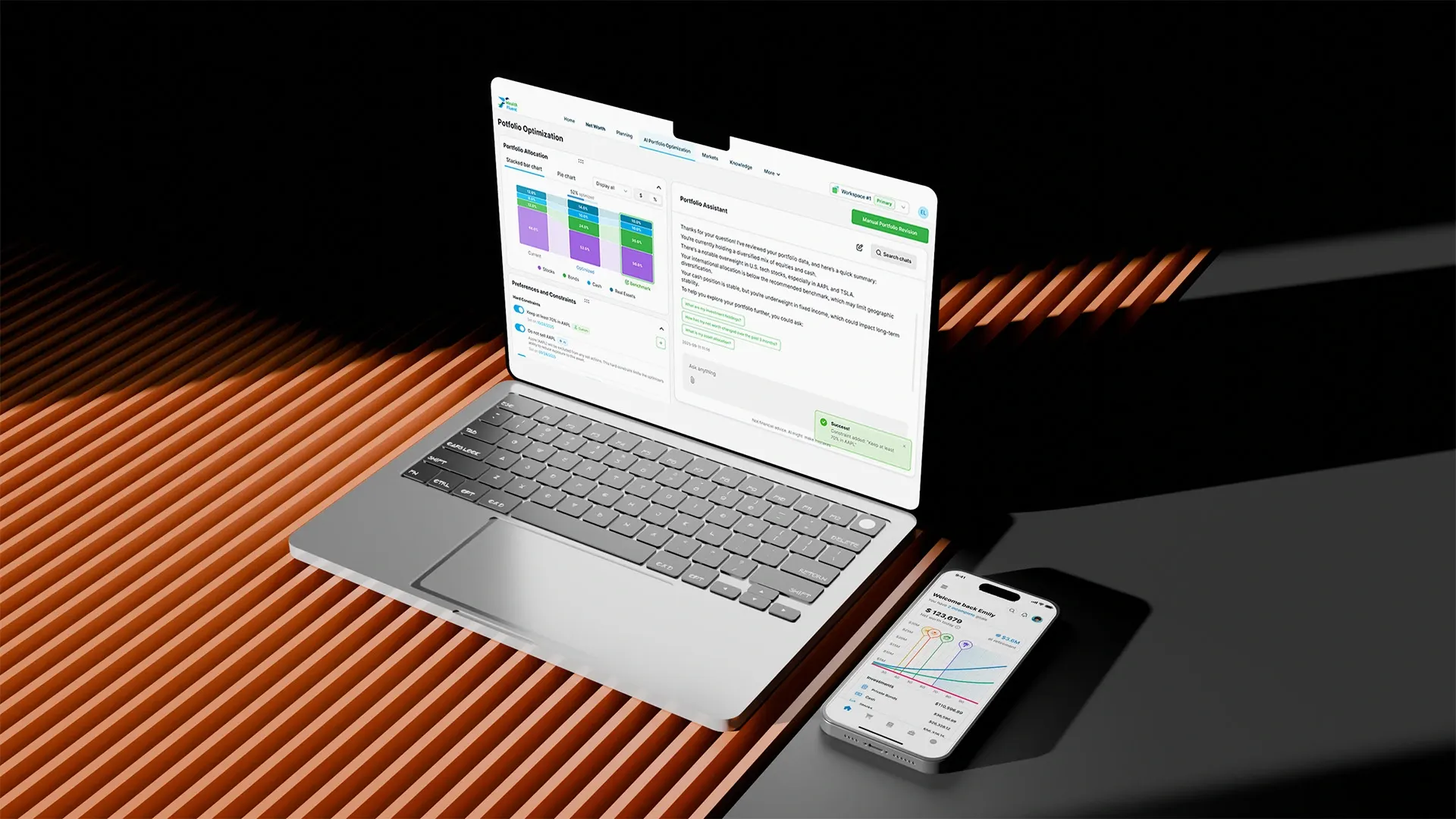
Launched in 6 months with zero AI hallucinations
For a US fintech, we built an AI assistant that explains portfolios and goals in plain language. A separate deterministic calculation engine makes sure every figure comes from verified data, so the assistant stays compliant with US financial regulations.
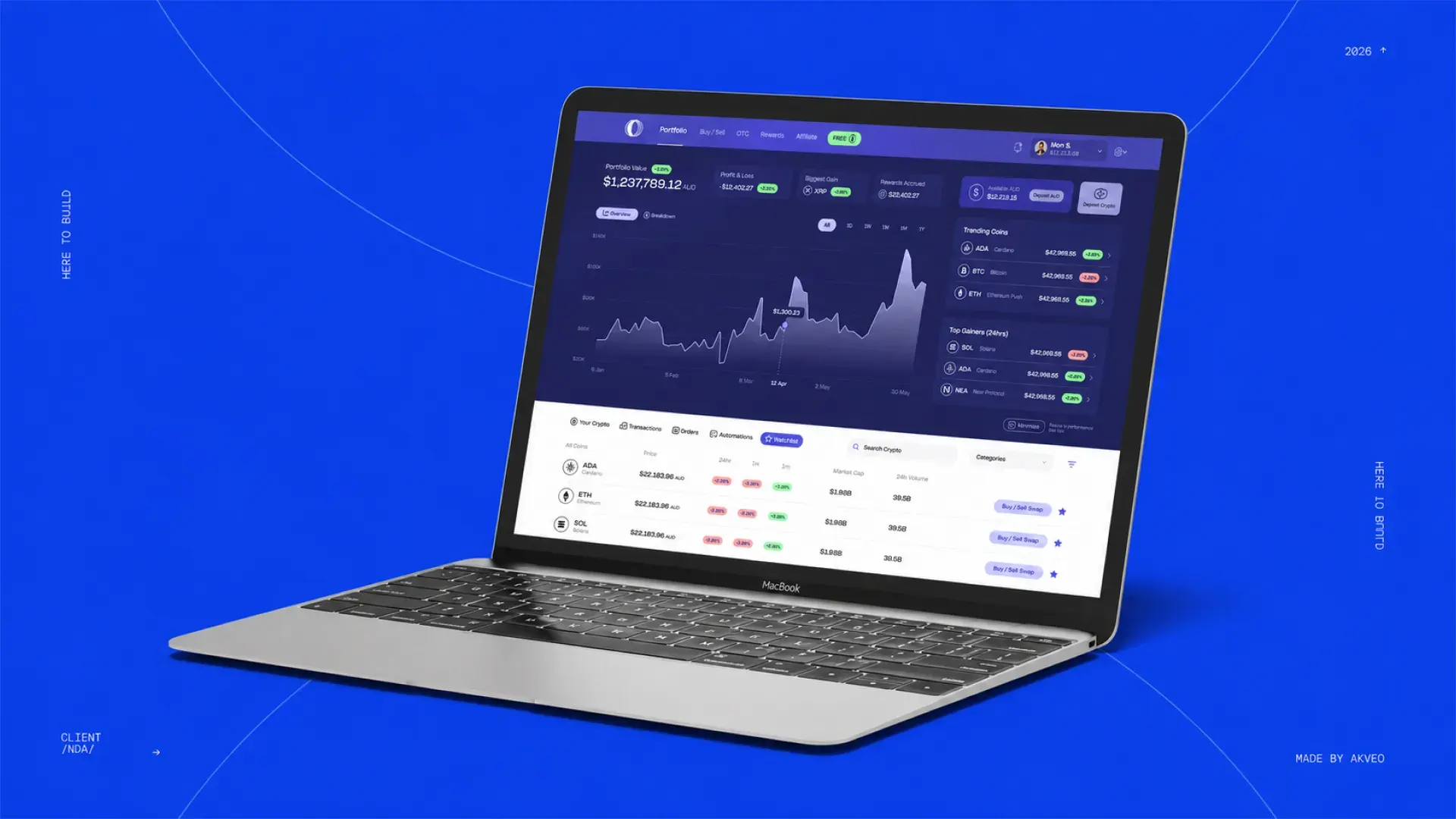
Delivered in 2 months across 3 regions
For a fund investing in emerging-market fintech lenders, we integrated Retool components into its investor portal to centralize application pipelines, aggregate unstructured lender metrics and standardize risk evaluation.
Sources
Tell us about your advisors, your CRM and custodian setup and the workflow that takes the most time. We will come back with the AI use case that pays off fastest and a rough estimate.