
Shopping assistant on your site
Finds products, compares options, builds a cart and checks out after the shopper confirms. Needs the catalog, live inventory, payments and loyalty data.
Shoppers already ask AI to find, compare and increasingly buy products, while retail teams drown in reporting, returns and service tickets. Here is what the data says about agents on both sides of the counter, and what a retailer needs to make them work.

AI tools are now a fast-growing way shoppers arrive, and those visitors have started to convert better than average. Many retail sites are still only partly readable by the models that send them.
E-commerce grew 12.2% year over year in the second quarter of 2026, almost twice as fast as total retail at 6.7%. That digital channel is where shopping agents search, compare and check out.
Share calculated from the Census Bureau's quarterly estimates of e-commerce and total retail sales. The latest quarter is preliminary.
| Q1 '24 | 15.9% |
|---|---|
| Q2 '24 | 16.1% |
| Q3 '24 | 16.2% |
| Q4 '24 | 16.2% |
| Q1 '25 | 16% |
| Q2 '25 | 16.3% |
| Q3 '25 | 16.4% |
| Q4 '25 | 16.7% |
| Q1 '26 | 17% |
| Q2 '26 | 17.1% |
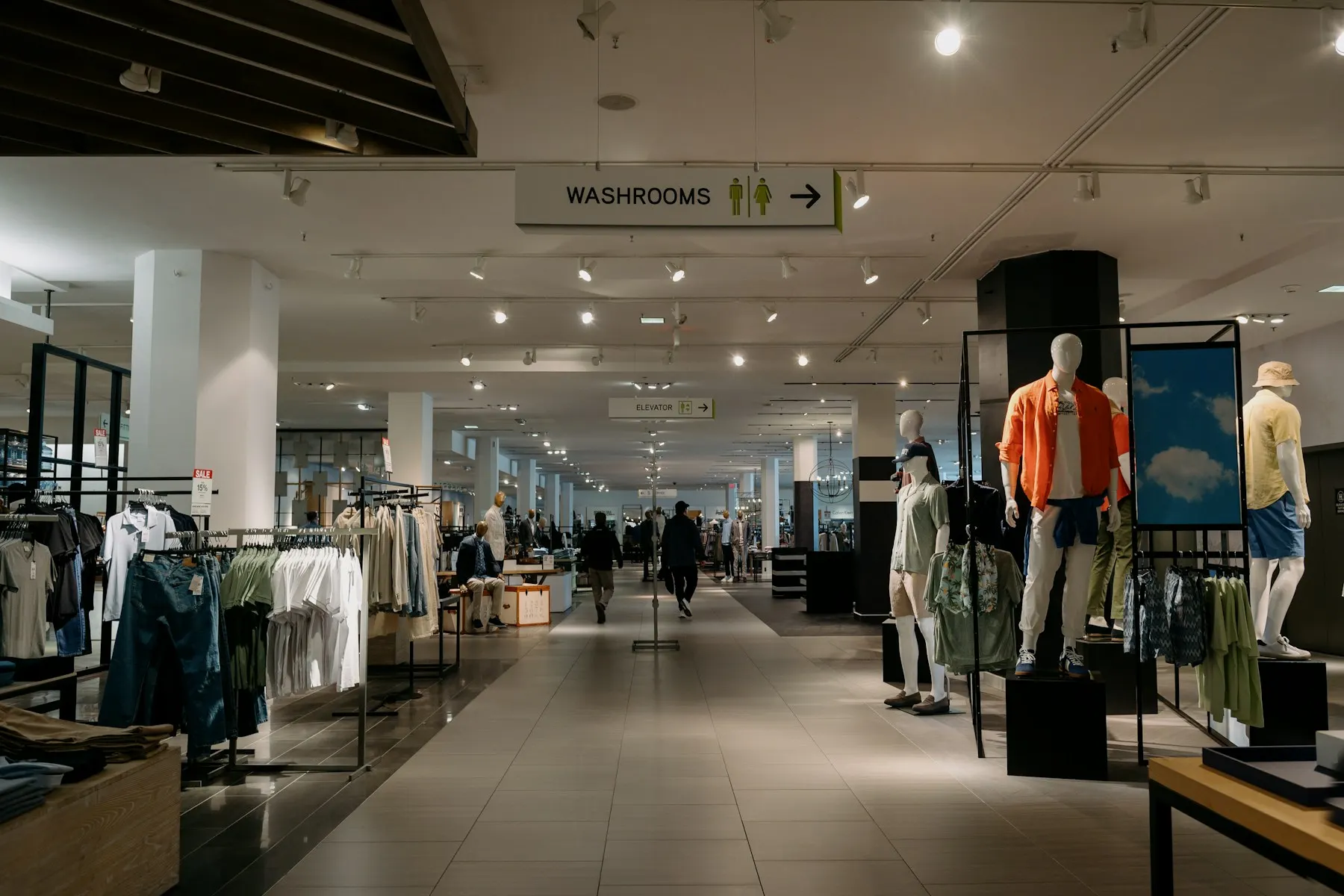
The work that slows retail down is repetitive, spread across systems and done by teams that keep changing.
In a McKinsey survey of 114 merchants, respondents said they still spend 40% of their time on low-value tasks, and 71% said AI merchandising tools have had limited or no effect so far. McKinsey points to fragmented systems and messy data as the reason.
Turnover makes it harder. US retail had 698,000 open jobs in September 2026, and retailers recorded 4.76 million quits during 2025. Every process that lives in people's heads has to be taught again.
An agent does more than answer. It takes actions in your systems within limits you set. Pick an area to see what agents do and which systems they need.
Finds products, compares options, builds a cart and checks out after the shopper confirms. Needs the catalog, live inventory, payments and loyalty data.
Exposes product data, cart and checkout so third-party agents such as ChatGPT or Gemini can buy from you. Needs PIM, product feeds, checkout APIs and fraud controls.
Handles order status, address changes, cancellations and return requests, and hands complex cases to a person. Needs the OMS, carrier tracking, helpdesk and payments for refunds.
Classifies return reasons, checks fraud signals and policy, routes items to restock, refurbish or liquidation and issues refunds within limits.
Builds performance reports, assortment diagnostics and vendor materials, and flags margin lost to stock-outs. Needs the ERP, data warehouse and planning tools.
Monitors competitor prices and margin rules and proposes markdowns for a merchant to approve.
Reads demand signals and stock levels and drafts purchase orders and transfers within agreed limits. Needs the ERP, WMS and supplier portals.
Gives store teams task lists, shift handovers and answers from SOPs, which matters when staff turn over quickly.
McKinsey asked AI users across 11 markets whether they had completed a purchase directly with an AI tool in the past three months. Apparel and grocery lead. In the US, grocery grew fastest, up 11.1 points since December 2025.
McKinsey Agentic Commerce Consumer Survey, June 2026, about 21,000 consumers. A selection of the categories measured.
| Apparel, footwear and accessories | 18% |
|---|---|
| Grocery | 16.8% |
| Restaurants and food delivery | 16.6% |
| Travel and hospitality | 16.4% |
| Beauty and personal care | 16.2% |
| Consumer electronics | 16.2% |
| Home, garden and hardware | 10.5% |
| Pet care | 10.4% |
Our view
When an agent shops for a customer, it does not see your homepage or your campaign. It sees product data, live availability, price, delivery promises and a checkout it can complete. Retailers whose catalog an agent can read and buy from are more likely to be chosen: McKinsey reports that AI searches connected to a retailer's catalog convert at about twice the rate of searches on scraped data. The same work powers their own service and merchandising agents.
For agents to buy on a shopper's behalf, retailers, platforms and payment networks need shared rules for catalogs, carts, payments and proof that the agent is trusted. These are the main protocols and card-network programs so far.
| Protocol | Backed by | What it standardizes | Announced |
|---|---|---|---|
| Agentic Commerce Protocol (ACP, beta) | OpenAI and Stripe | How buyers, their AI agents and businesses complete a checkout, including delegated payment | September 2025 |
| Agent Payments Protocol (AP2) | Google, with 60+ organizations | Agent-led payments using cryptographically signed mandates for the shopper's intent and cart | September 2025 |
| Universal Commerce Protocol (UCP) | Google, co-developed with Shopify, Etsy, Wayfair, Target and Walmart | The whole shopping journey across agents and retailers, compatible with A2A, AP2 and MCP | January 2026 |
| Trusted Agent Protocol | Visa, with Cloudflare | How merchants recognize a trusted AI agent, using HTTP message signatures | October 2025 |
| Mastercard Agent Pay | Mastercard | Agentic tokens that extend card tokenization to payments made by AI agents | April 2025 |
Most of these are still early, and McKinsey reports that OpenAI has scaled back instant checkout in ChatGPT. Check each protocol's current status before you commit to an integration.
Shoppers use AI to research, but far fewer would let it pay. Concern about data use and doubts about accuracy are both widespread.
Want to know if your store is agent-ready?
We review your catalog data, commerce platform and checkout and show what it takes for agents to find and buy your products.
Agents fail on data and permissions more often than on models, so most of the work happens before launch.
Choose a frequent task such as order status, return requests or a weekly merchandising report, and agree how success is measured.
Clean product data, attributes and availability so an agent can read them, and fix gaps that would make answers wrong.
Integrate the commerce platform, OMS, ERP and helpdesk through APIs, with read and write permissions defined per action.
Define what the agent may do alone, what needs confirmation from the shopper or a colleague, and spending, refund and discount limits.
Launch to a share of customers or one team, log every action and compare cost, speed and errors with the current process.
Extend to more workflows and, when the catalog is ready, open checkout to third-party agents through the protocols your platforms support.
Structure attributes, sizes, availability and policies so models can parse them, and keep prices and stock accurate in real time.
Connect the commerce platform, OMS, ERP and helpdesk through one integration layer instead of building a separate bot for each.
Use tokenised agent payments, explicit shopper confirmation and fraud checks for every action that moves money.
Measure each agent on one business number, such as tickets resolved, return cost or analyst hours, against the current process.
Agents act on commerce, order and analytics systems. These are integration projects we delivered for retail clients, the groundwork an AI agent plugs into.
40% increase in customer engagement
We built an iOS and Android shopping app with integrated payments, logistics management and real-time order tracking for shoppers and drivers, from concept to launch in 9 months.

2 dashboards with Shopify integration
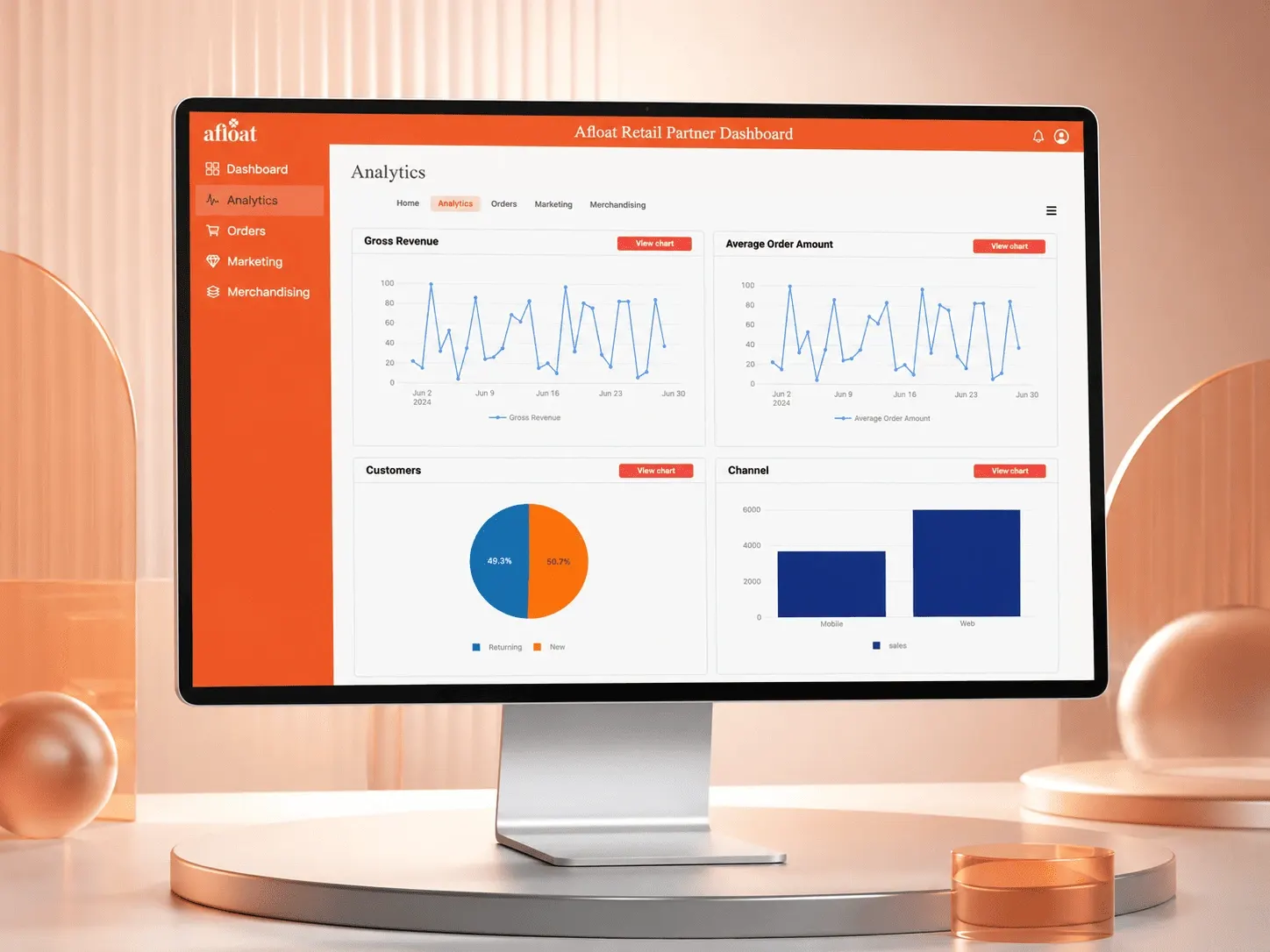
For a same-day gifting marketplace, we built order management, delivery tracking and reporting dashboards for retail partners and admins, integrated with Shopify.
Sources
Tell us about your platforms and the workflow that takes your team the most time. We will come back with where an agent pays off fastest and a rough estimate.