
Coaching from safety events
Groups harsh braking, speeding and camera events by driver and pattern, drafts coaching notes and tracks whether behavior improves. Needs telematics events, video and the driver roster.
Truckload carriers run on operating margins under 1%, while repair and insurance costs keep rising and congestion costs trucking $128 billion a year. Fleets already collect the data that could cut those costs, yet transportation and warehousing businesses adopt AI at less than half the national rate. This page shows where AI pays off in a fleet, what the evidence supports and how to connect it to the systems you already run.
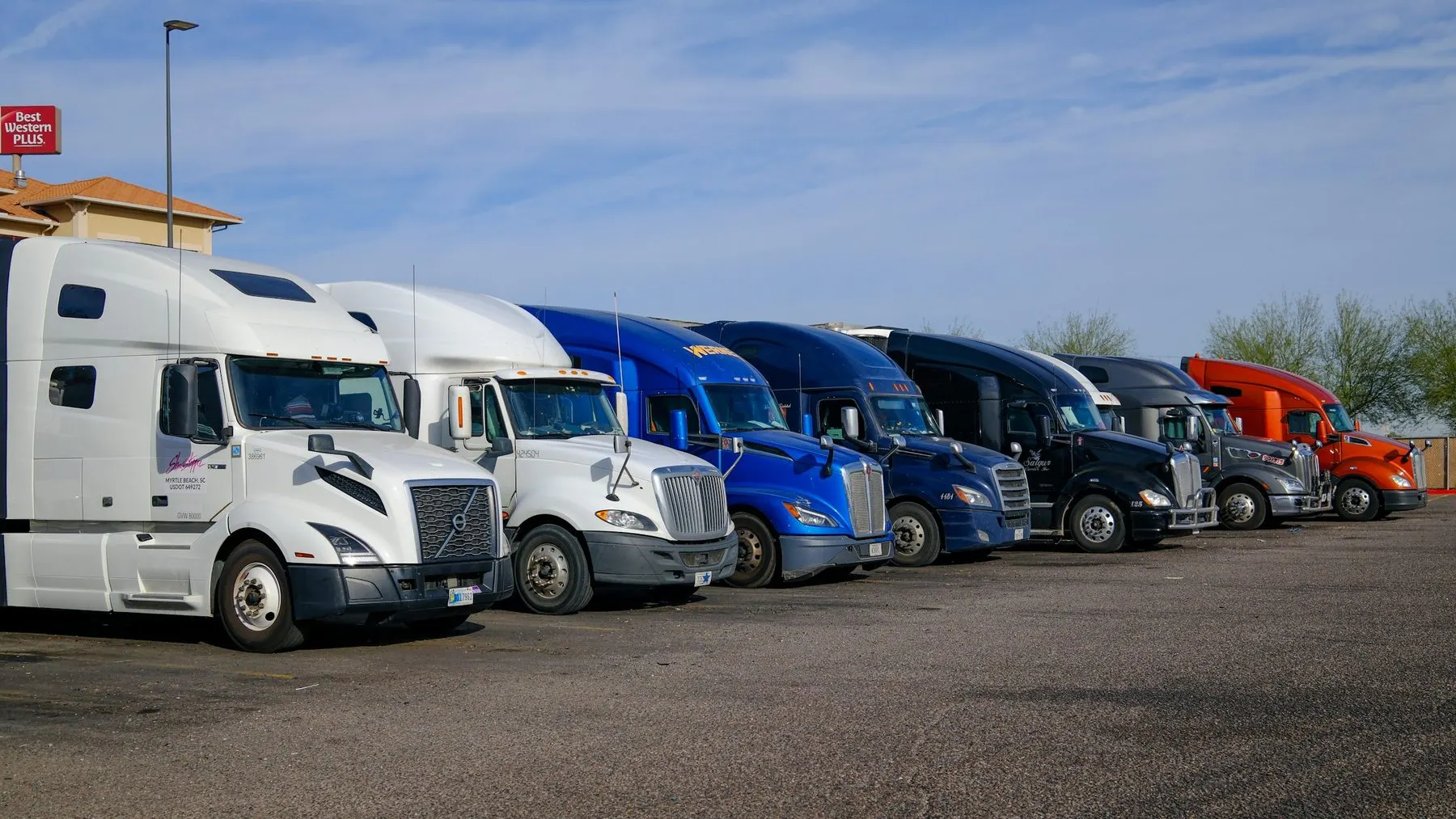
ATRI's annual analysis of carrier financial data shows the cost of running a truck reached a new high in 2025, while truckload and refrigerated carriers kept less than 1 cent of each revenue dollar and flatbed carriers lost money.
The Census Bureau asks US businesses every two weeks whether they used AI in any business function. Transportation and warehousing firms sit at less than half the national rate, and the gap widened over the past year.
Census Business Trends and Outlook Survey, transportation and warehousing sector (NAICS 48–49), every second two-week period, labeled by the period's end date. Sector estimates move a lot between periods. All US businesses rose from 17.2% to 25.0% over the same periods. The question changed in November 2025, so these figures cannot be compared with earlier BTOS releases.
| Dec 14 | 6.4% |
|---|---|
| Jan 11 | 8.6% |
| Feb 8 | 7.8% |
| Mar 8 | 8.7% |
| Apr 5 | 8.5% |
| May 3 | 7.6% |
| May 31 | 10.6% |
| Jun 28 | 9.8% |
| Jul 26 | 10.7% |
| Aug 23 | 10.2% |
| Sep 20 | 13% |
| Oct 18 | 13.5% |
| Nov 15 | 9.9% |
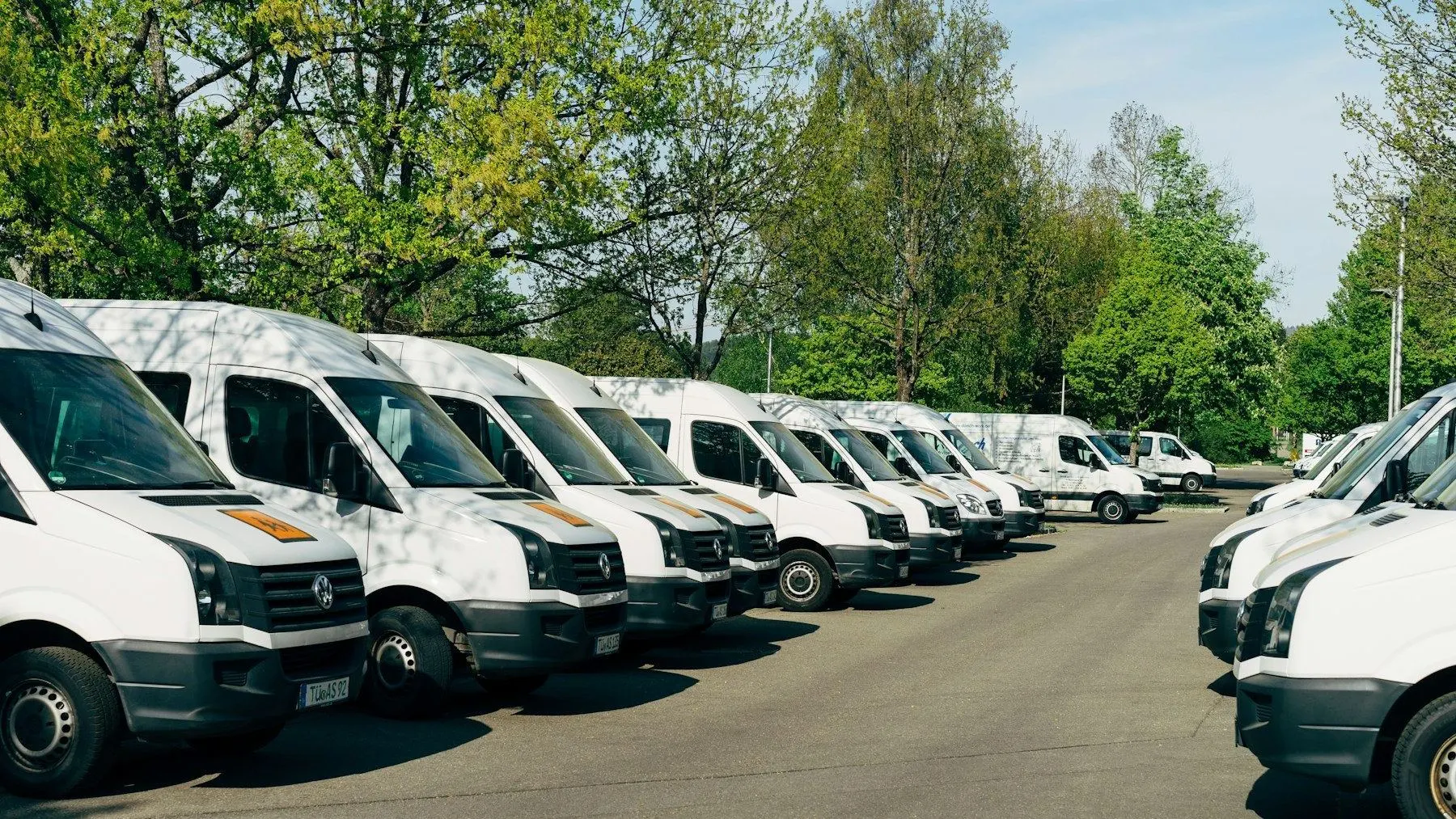
Several of the costs that keep growing are ones AI can influence: maintenance, insurance and time lost on the road.
In ATRI's 2025 cost data, the largest increases were in tolls (13.2%), repair and maintenance (8.6%), driver benefits (6.6%) and tires (6.4%). Liability insurance premiums rose 18.6% from 2021 to 2024 to 10.2 cents per mile, even as crash rates fell, and ATRI found that six safety technologies were linked to lower liability losses per mile.
Time is the other cost. Congestion cost US trucking $128.2 billion in 2024, about $7,973 per truck. Fleets cannot avoid most of that delay, but better ETAs and dispatch decide whether customers hear about it in time.
Each use case below runs on data fleets already collect in telematics, ELDs, maintenance systems and the TMS. Pick an area to see what AI does and which systems it needs.
Groups harsh braking, speeding and camera events by driver and pattern, drafts coaching notes and tracks whether behavior improves. Needs telematics events, video and the driver roster.
Assembles video, speed, location and hours of service records for an incident into one file for the safety team and insurer. Needs telematics, ELD and video storage.
Explains diagnostic trouble codes, ranks them by urgency and suggests whether the truck can finish the route. Needs engine data from telematics and the maintenance history.
Learns from past repairs, mileage and sensor data which components are likely to fail next, so work is scheduled before a roadside breakdown. Needs the maintenance system and telematics history.
Checks vendor repair orders against warranty, past work and typical labor times before they are paid. Needs the maintenance system and invoices.
Predicts arrival times from live traffic, stop durations and remaining driving hours, and warns customers before a delay. Needs GPS, ELD hours and the TMS.
Suggests which driver and truck should take a load based on location, hours, equipment and home time. Needs the TMS, ELD and driver preferences.
Flags fuel card transactions that do not match the truck's location, tank size or route. Needs fuel card data and GPS.
Schedules charging around routes, depot capacity and electricity tariffs for electric vans and trucks. Needs telematics, charger data and the route plan.
Answers drivers' and dispatchers' questions about hours of service, inspections and company policy, with links to the source. Needs ELD data and policy documents.
Reads bills of lading, proofs of delivery and invoices and enters them into the TMS and accounting system for review.
ATRI's survey of more than 4,200 trucking stakeholders put AI in the top 10 industry issues for the first time in 2025, driven by drivers worried about jobs and by AI-enabled fraud. Drivers ranked it sixth; carriers did not rank it in their top 10. Of those who chose AI, 41.1% said the first step should be research on what AI can do in trucking.
ATRI Critical Issues in the Trucking Industry 2025, survey of more than 4,200 North American stakeholders, September–October 2025. In the 2026 survey, fuel prices became the top issue and AI stayed in the top 10.
| Economy | 100 |
|---|---|
| Lawsuit abuse reform | 71.6 |
| Insurance cost and availability | 69 |
| Truck parking | 62.5 |
| Driver compensation | 59 |
| CSA safety scores | 53.4 |
| English proficiency for drivers | 52.8 |
| Diesel emissions rules | 52.5 |
| Driver training standards | 43.5 |
| AI in trucking | 43.4 |
Many results quoted for fleet AI come from vendors. Here is what government, research-institute and ATRI studies published since 2023 show, and what they do not.
| Area | Source | Result | Keep in mind |
|---|---|---|---|
| Eco-routing | NREL analysis in a DOE-funded project led by truck maker PACCAR, 2024 | 11.8% average energy savings with 12.3% longer travel time on heavy-truck trips under 75 miles; the report concludes about 10% is achievable | Simulated on recorded trips from 6 heavy trucks in Texas |
| Emergency braking and stability control | NHTSA and FMCSA proposed rule, 2023 | Estimated 19,118 fewer crashes and 155 lives saved a year once all heavy vehicles have both systems | A regulatory estimate for a rule that is still proposed |
| Safety technology and insurance | ATRI analysis of carrier insurance and loss data, 2026 | Six safety technologies were linked to lower liability losses per mile | A correlation, not proof of cause; per-mile liability losses still rose 33.1% among respondents |
| AI dash cams | Virginia Tech Transportation Institute test-track study, 2025 | In a Class 8 tractor, the Nauto camera alerted in every handheld-phone, phone-in-lap and seatbelt trial, but in only 50% of close-following trials | Tasks were selected by the sponsor; it does not measure crashes |
| Predictive maintenance | We found no independent fleet-level study since 2023 | Published work tests models on benchmark data, not measured fleet savings | Measure downtime and repair cost on your own fleet before and after |
Our view
Most fleets do not need new hardware to start with AI. Telematics, ELDs, maintenance systems and the TMS already record what happened; the problem is that nobody has time to review it all. In ATRI's 2026 study of telematics metrics, cost per mile scored highest for importance among operations metrics, yet only 73% of surveyed carriers used it. Pick one costly decision, such as which fault codes need a truck off the road, connect the systems behind it and measure the result before adding the next one.
NHTSA and FMCSA proposed in 2023 to require automatic emergency braking and electronic stability control on vehicles over 10,000 pounds. No final rule had been issued by November 2026, and DOT plans a revised proposal.
AI cameras that analyze drivers' faces can collect biometric data. In states such as Illinois, that requires written consent, and a camera vendor settled an Illinois class action for $4.25 million in 2025. Settle consent, retention and access before rollout.
ELD records are the legal record of drivers' hours. AI that plans loads or answers compliance questions should read them, not replace them, and keep the ELD as the source of truth.
EPA repealed federal greenhouse gas standards for vehicles, including the 2024 Phase 3 rules for heavy trucks, effective April 20, 2026; the repeal is being challenged in court.
Planning AI for your fleet?
We review your telematics, maintenance and dispatch data and show which decision AI can improve first.
One decision, real data and a clear before-and-after.
Choose a frequent decision with a measurable cost, such as fault code triage, repair order approval or ETA updates.
Record downtime, cost per mile, late deliveries or review time for that decision now, so results can be compared.
Integrate telematics, ELD, maintenance and TMS data through their APIs, without new hardware where possible.
Let AI recommend and explain, while dispatchers, technicians and safety managers approve the action.
Run it on live operations, compare the results with the baseline and collect feedback from drivers and staff.
Roll out to the whole fleet, then add the next use case on the same data layer.
A telematics app for a ZF Group company, a smart parking and EV charging platform in Sweden, and the fleet management software we build.
2.5x shorter app maintenance time
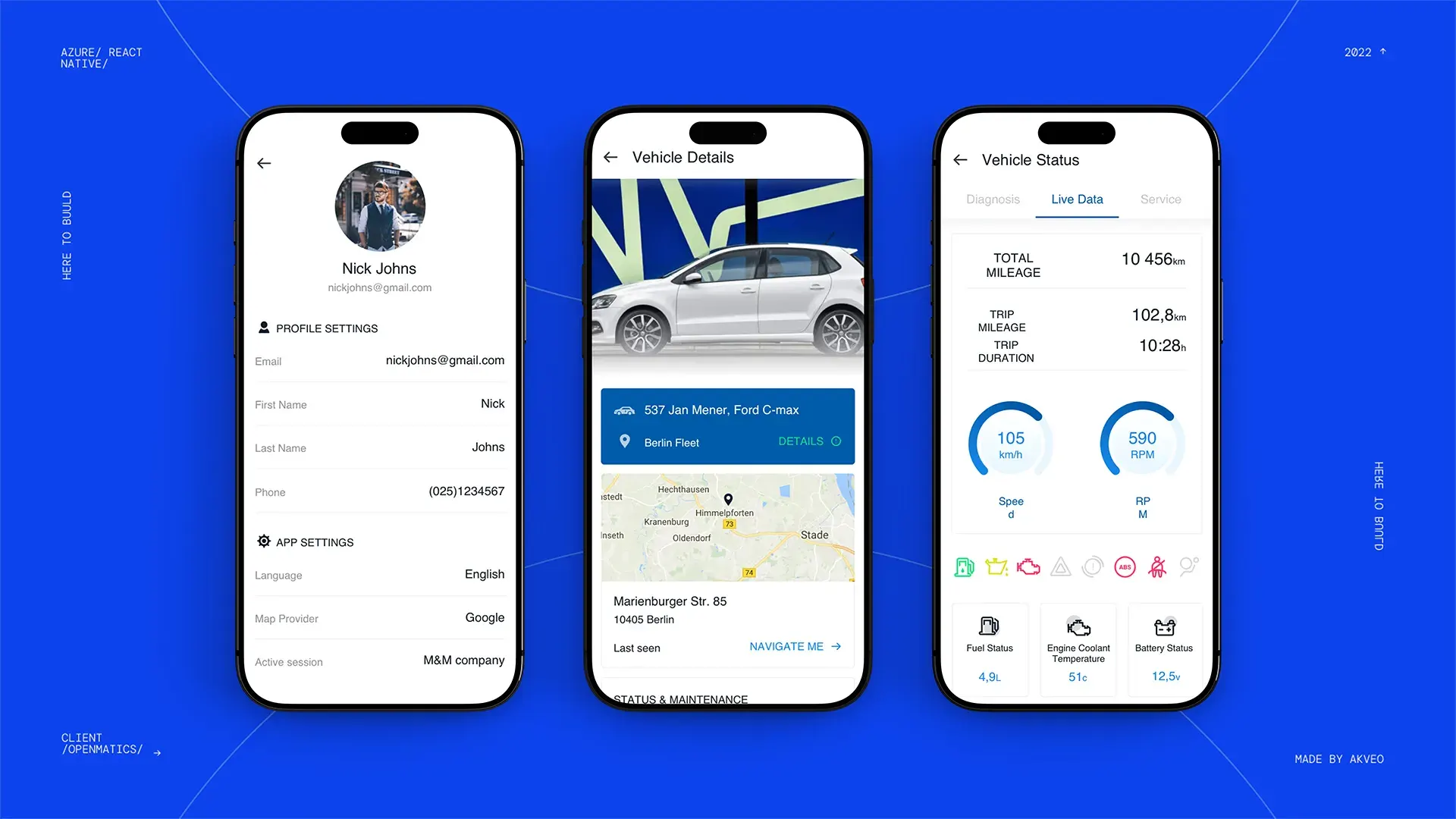
For OPENMATICS, a ZF Friedrichshafen subsidiary that provides telematics for fleet operators, we built a cross-platform app with a digital logbook for business and private trips, find-my-car navigation and work tracking for sweeper machines, adapted for the Chinese market and its data residency rules.
7+ core features shipped
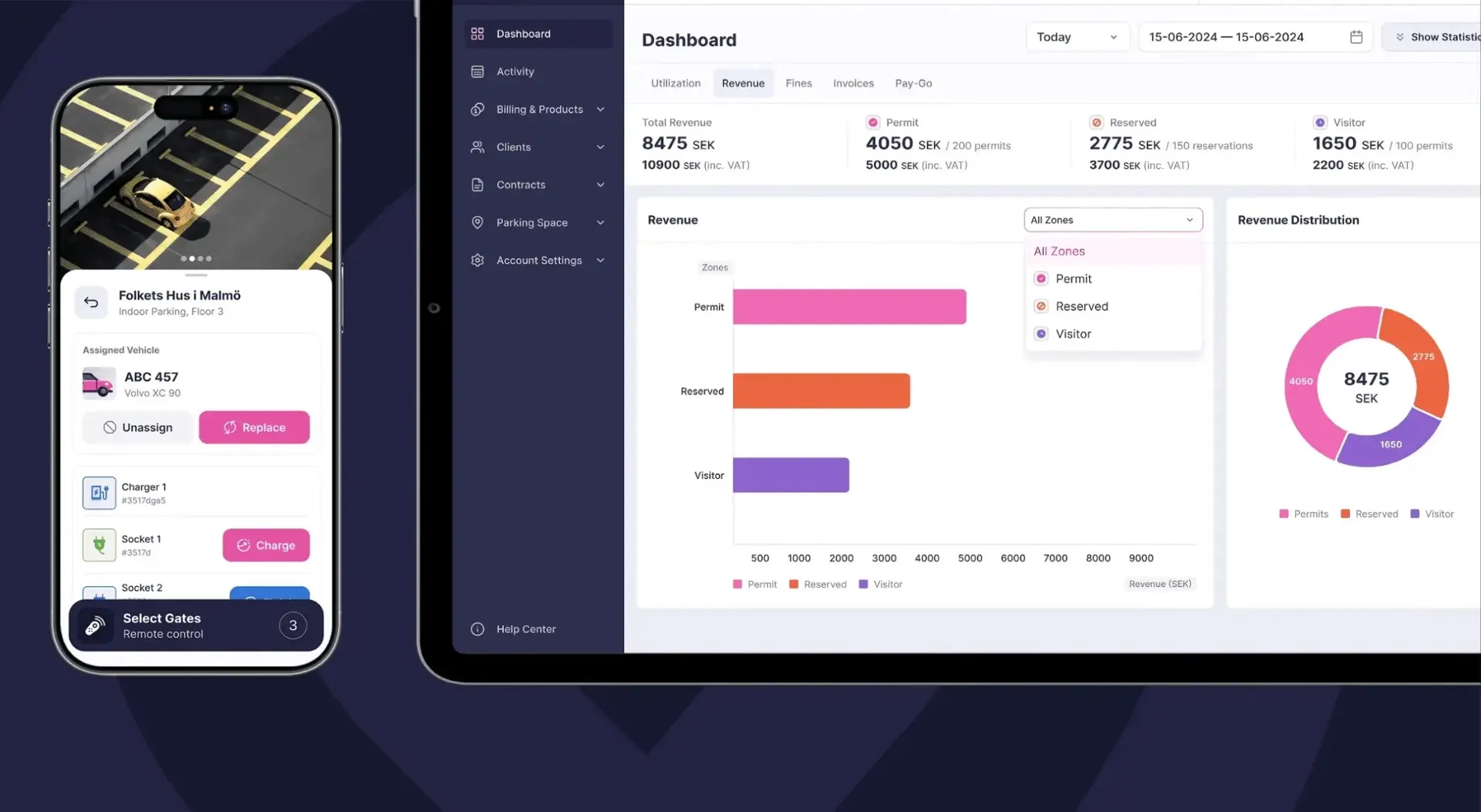
Since 2022, we have worked as an extension of a Swedish parking operator's team, building digital parking permits, automated license plate recognition (ANPR), gate and garage control, visitor registration, and integrated EV charging with power balancing and live statistics in iOS, Android, and web apps.
Tracking, maintenance, fuel and dispatch in one platform
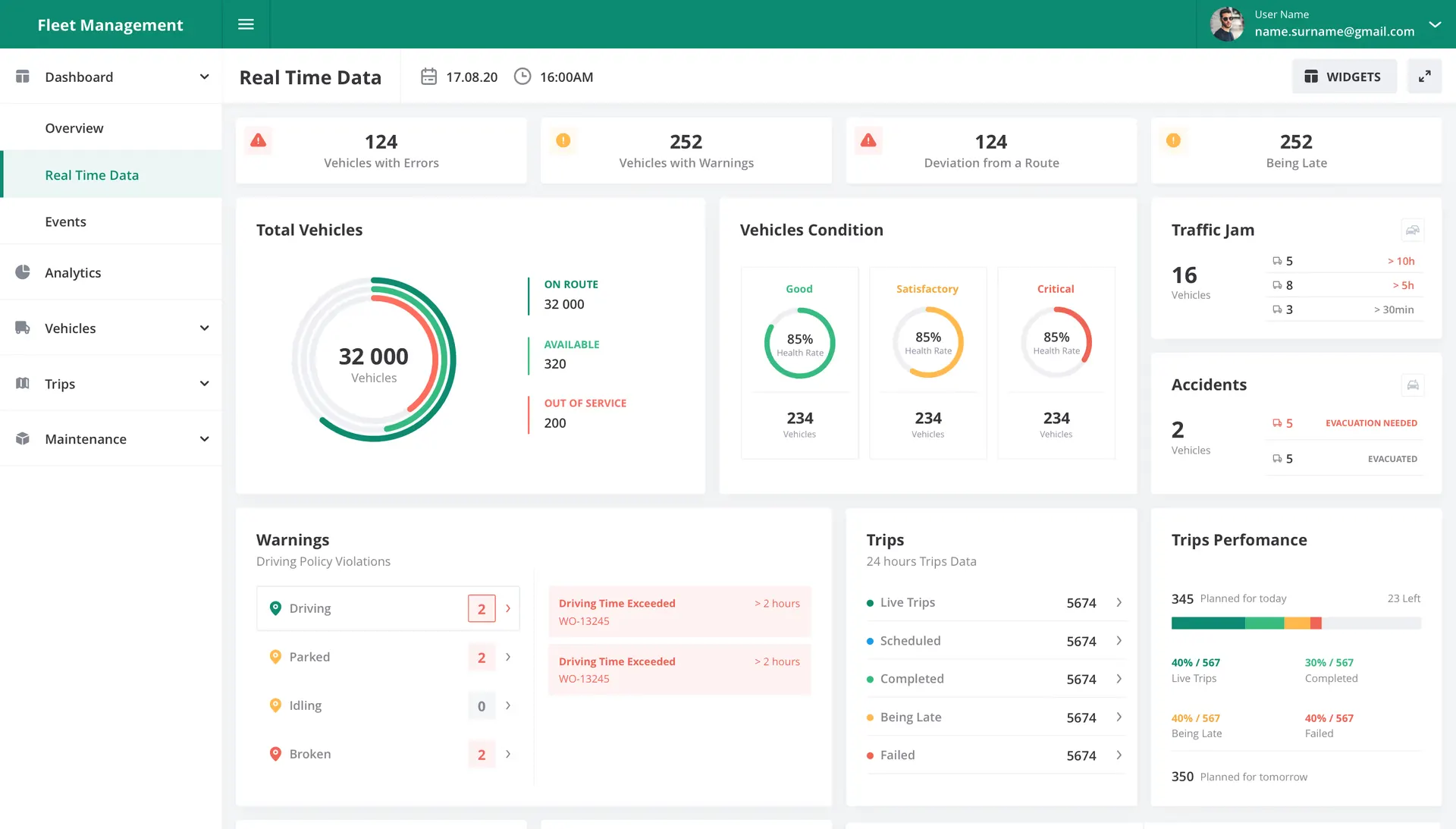
We build fleet platforms around your operations: GPS tracking, telematics and IoT integration, maintenance, fuel and driver apps, plus the data layer that AI use cases need. We have already designed a real-time fleet dashboard, so the interface does not start from scratch.
Sources
Tell us about your fleet, your telematics and maintenance systems and the decision that costs you the most. We will come back with where AI pays off first and a rough estimate.