




Low-code development platforms allow so-called citizen developers (e.g., business analysts, managers, and designers) to participate in software engineering, democratizing the process. 41% of companies already have citizen development initiatives in place, and 21% of those who do not plan to launch them in the future. An impressive 39% of experts consider low-code digital transformation to be the responsibility of business departments as opposed to IT teams.
Low-Code Adoption Statistics 2026: Industries, Countries, Trends
How fast is low-code adoption growing and which industries are leading the way? Explore the latest trends, market forecasts, drivers, and challenges of low-code adoption in this comprehensive report.
Low-code and no-code development on the rise
Along with AI and machine learning, low-code development emerged as a much-anticipated solution to the whole range of issues in software development.
Extended project timelines, high cost of custom software, lack of qualified talent on the market, and overwhelmed IT departments – all these constraints can be tackled by low-code digital transformation.
With low-code development platforms, 61% of users successfully deliver custom apps on time, on scope, and within budget. Low code has the potential to speed up software development by up to 10 times.
By utilizing user-friendly tools such as pre-built templates, drag-and-drop features, and website UIs, low-code development platforms have democratized software development. According to research, 70% of users learn to use low-code development platforms within less than a month.
With over 500 million custom applications to be built within the next few years, low code couldn’t have come at a better time.
State of low-code adoption
- 87%of enterprise developers use low-code
- 400+low-code development platforms on the market
- 88%of organizations have a low-code project underway
- 56%of companies consider their low-code capabilities advanced
- 58%of experts believe low-code technology meets their company's needs
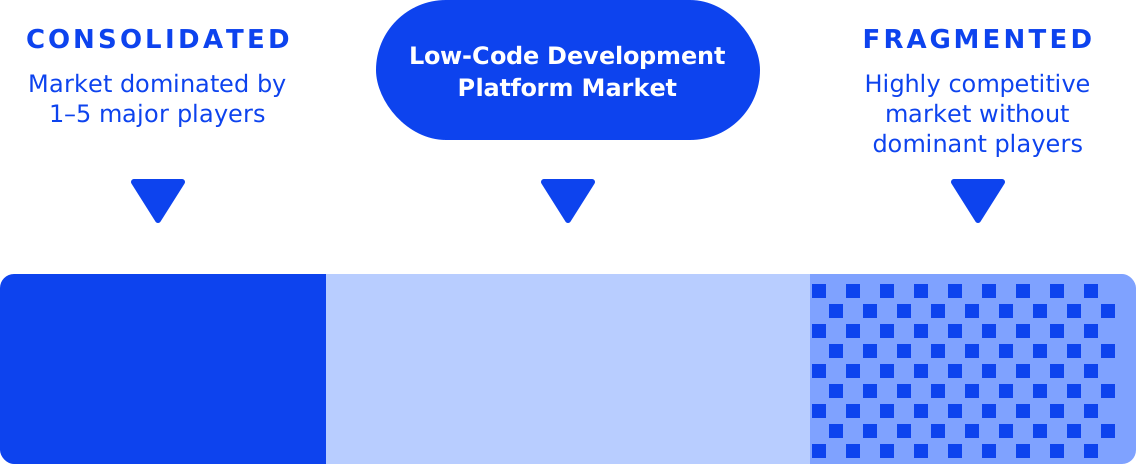
Major players in the low-code development market include Microsoft, Oracle, Appian, Salesforce, and Pega.
From marketing to the Internet of Things, low-code platforms are heavily used by businesses globally.
- Actual use
- Planned use
- Customer relationship managementActual use: 42%Planned use: 45%
- E-commerce, sales & marketingActual use: 42%Planned use: 45%
- Human resource management & employee portalsActual use: 39%Planned use: 41%
- Customer portalsActual use: 37%Planned use: 40%
- Customer serviceActual use: 36%Planned use: 40%
- Supply chain managementActual use: 36%Planned use: 34%
- Data AnalyticsActual use: 35%Planned use: 37%
- ProductionActual use: 34%Planned use: 38%
- Enterprise resource planningActual use: 34%Planned use: 40%
- IoT and Industry 4.0Actual use: 30%Planned use: 29%
Source: KPMG, Shaping digital transformation with low-code platforms (2022)
Whatever type of application you are building, you could build it quicker with low code.
Web, desktop, and mobile
Desktop- and server-based low-code apps continue to dominate the market thanks to low-code’s capability to automate complex business processes. Low code can easily integrate with existing IT solutions, making it particularly attractive for large enterprises.
- 44%of low-code platforms are desktop- and server-based
- 35%of market revenue share accounted for by mobile low-code apps
- 22%annual growth rate for the web-based low-code app market
Cloud and on-premise
Combined with low code, cloud infrastructure allows businesses to enjoy the benefits of scalability, easy collaboration, and lower costs. It is especially important in the increasingly remote development environment.
- 58%of low-code apps use cloud infrastructure
- 42%of low-code apps are based on on-premise infrastructure
- 24%annual growth rate predicted for the cloud-based low-code app market
Small, medium, and large businesses
Small and medium enterprises are the key users of low-code development platforms. For them, hiring talent and securing resources to build traditional custom software has always been particularly challenging.
- 57%of total market share held by SMEs
- 43%of the market accounted for by large enterprises
- 36%annual growth rate for SMEs’ low-code app market
Low code is useful when dealing with tight deadlines or competing priorities in the IT department.
- 40%GoalRapid prototyping
- 40%GoalReplacing legacy systems
- 36%GoalExtending existing systems
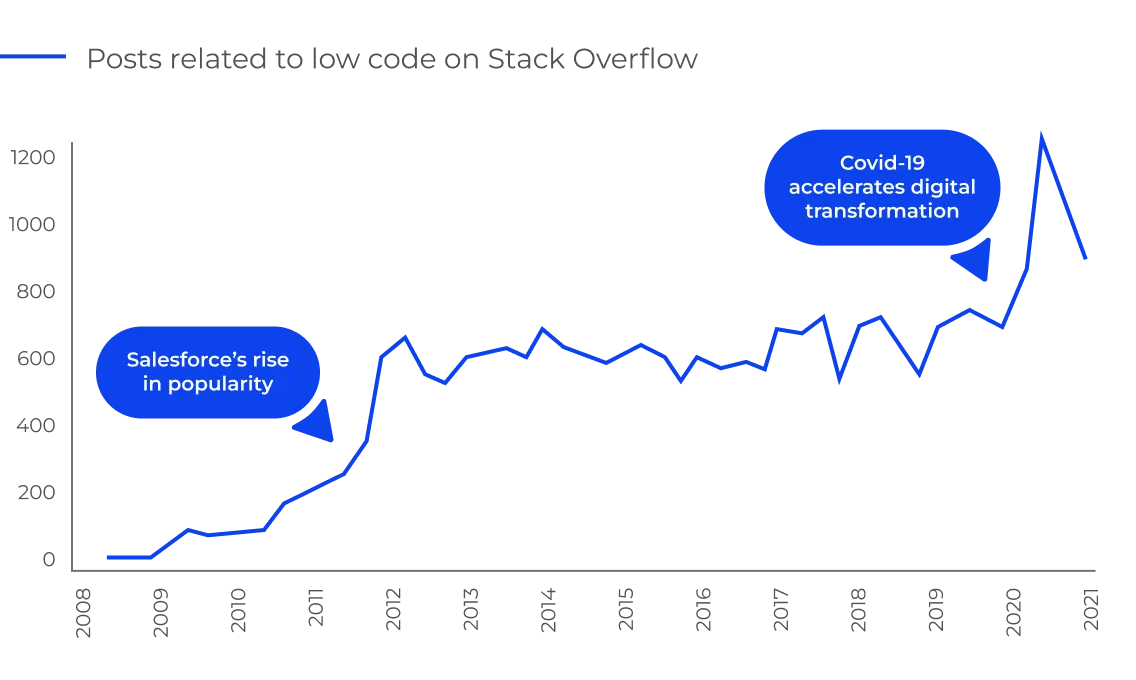
From 2008 to 2021, the number of Stack Overflow posts related to low-code development increased 20-fold.
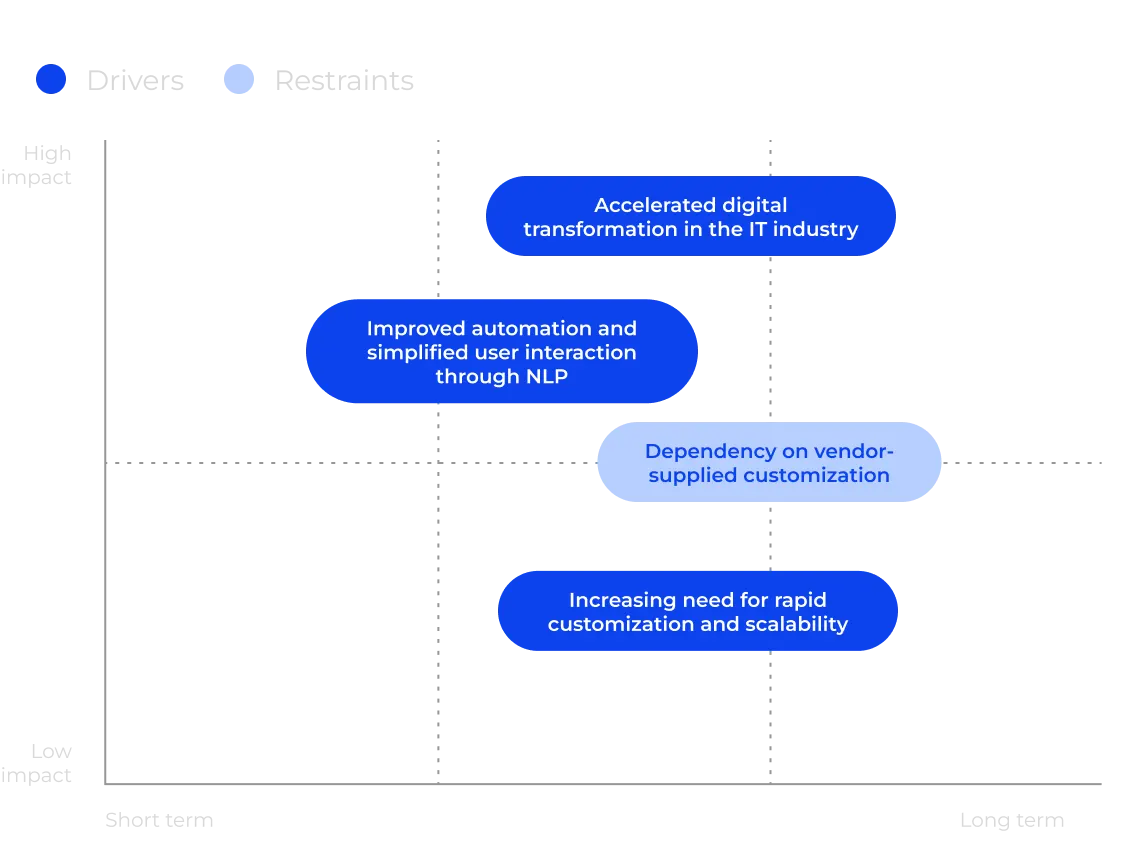
Challenges associated with low-code adoption
Even though most users find low-code digital transformation beneficial thanks to increased development speed, improved usability, and efficient use of resources, others note drawbacks that can limit low-code adoption.
Low-code adoption forecast until 2030
The low-code development market is estimated to grow by x4 times over the next 5 years, from $45.5 billion in 2025 to $187 billion in 2030.
Despite some predictions, the rise of AI will likely only accelerate low-code adoption.
- $13.2B2020
- $45.5B2025
- $187B2030
Low-code adjacent services such as consulting and outsourcing could hold a substantial market share of between $69 billion and $92 billion by 2026.
Factors influencing low-code market growth:
- Increasing low-code digital transformation initiatives
- Need for improved business agility
- Emergence of AI and IoT
- Growing pressure for faster time-to-market
- Democratization of software development
Regarding AI’s influence on the low-code market, experts’ predictions differ.
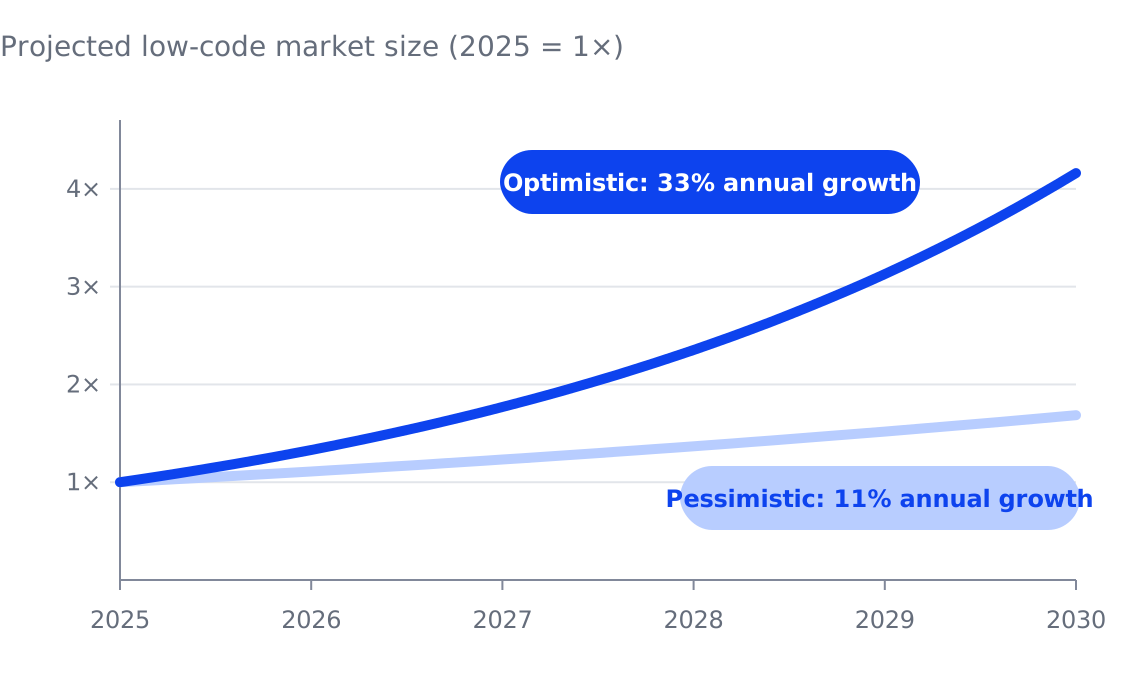
In one scenario, AI-powered low-code platforms dominate the market with a 33% annual growth rate. On the other hand, AI could accelerate and simplify high-code, leading developers to avoid low-code and reducing the market growth rate to 11%.
Low-code adoption trends

Low-code changed the way we build
Even 5 years ago, the development of an internal dashboard, a simple CRM, or a small business tool was synonymous with a long, boring, and complicated process, not to mention the costs of such a development.
I was impressed by how quickly, flexibly, and effectively we delivered our first low-code projects a few years ago. I was astonished at how happy our clients were.
I am still impressed and astonished: we deliver faster, we can adapt with no stress, and we facilitate client requests at a high speed without losing the quality the Akveo team is proud of.
Low-code adoption by countries
North America
North American region holds an impressive 34% of the global low-code market share, securing its place as the leading global market. The biggest players driving low-code adoption have a wide presence in the US, including Microsoft, Outsystems, Pegasystems, LANSA, Appian, and Oracle.
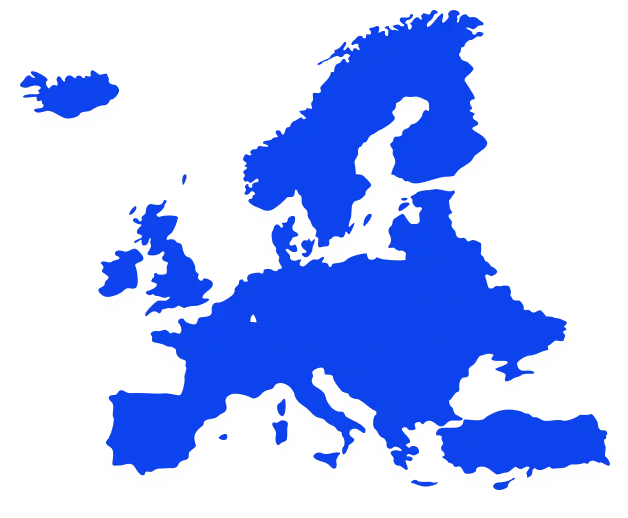
Europe
The European low-code market is quickly growing with a 30% compound annual growth rate. Low-code adoption happens quicker in Germany, France, and the UK, with all industries equally involved.
With the tightening of compliance and security regulations, the European low-code market will increasingly search for solutions that meet these new requirements.
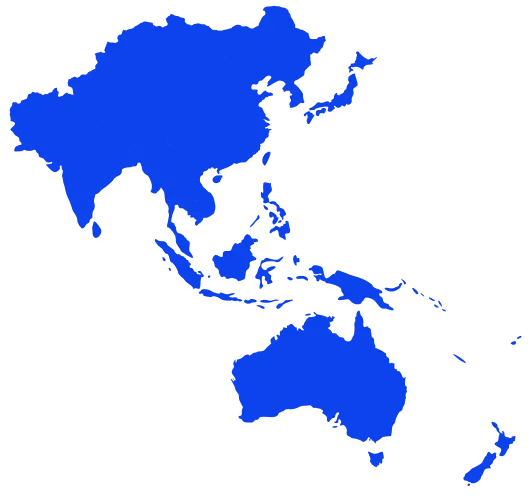
Asia-Pacific
Over the next 5 years, the Asia-Pacific low-code adoption is expected to witness an outstanding 31% annual growth rate from 2024 to 2029. Both digital-first economies (e.g. Japan, Australia) and developing countries (e.g. India, Southeast Asia) will adopt low-code solutions for various needs.
Mobile applications and SMEs will drive low-code adoption, with FinTech, retail, and public service organizations taking the lead.
South America
The LATAM market will observe significant low-code adoption growth over the next few years. The biggest economy in the region, Brazil, is leading the way, followed by Argentina, Mexico, Colombia, and Chile.
Each country in the region exhibits its own low-code adoption patterns, but overall, cloud adoption and equal involvement of various industries are becoming a trend.
Low-code adoption is particularly noticeable in the financial sector and various startups.
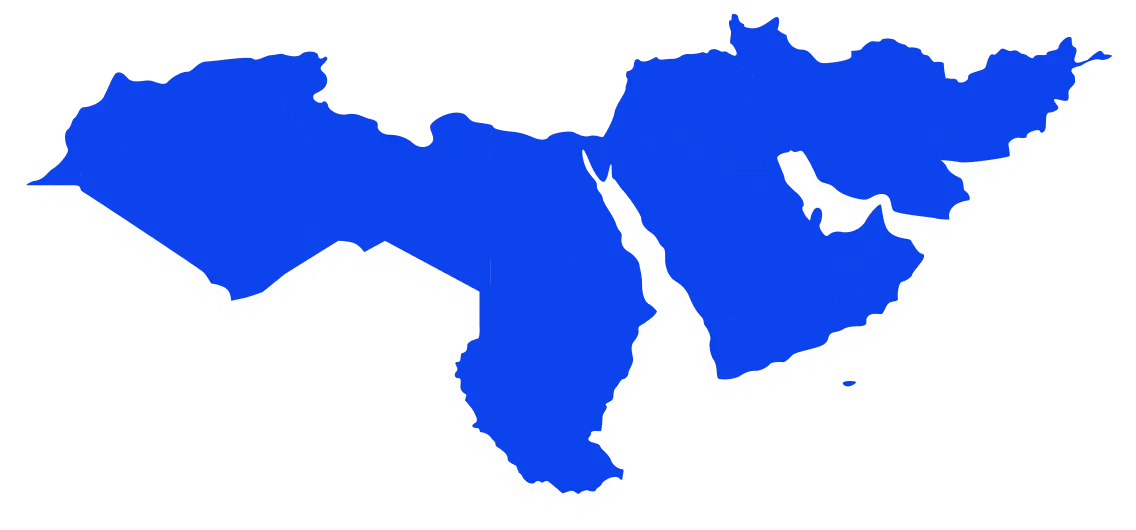
Middle East & Africa
In the MEA region, the low-code market is especially active in countries such as the United Arab Emirates and Saudi Arabia, further accelerated by government-sponsored digital transformation initiatives.
Sectors leading the low-code adoption include financial, government, and healthcare institutions. Low-code solutions allow businesses in the region to address the pressing skill gap issue and accelerate digital transformation.


Low-code adoption by industries
Sources
- Gartner
- Forrester
- IBM
- Microsoft
- Outsystems
- Mendix
- Mordor Intelligence
- Grand View Research
- KPMG
- JAMK University of Applied Sciences
- Lapland University of Applied Sciences
- HAL Open Access
- IEEE Access


Need help with low-code development?
The Akveo team is just a click away!
Let’s start
[ FAQ ]
Frequently Asked Questions
Common questions about low-code and no-code adoption.