
Extended project timelines, high cost of custom software, lack of qualified talent on the market, and overwhelmed IT departments – all these constraints can be tackled by low-code digital transformation.
With low-code development platforms, 61% of users successfully deliver custom apps on time, on scope, and within budget. Low code has the potential to speed up software development by up to 10 times.
By utilizing user-friendly tools such as pre-built templates, drag-and-drop features, and website UIs, low-code development platforms have democratized software development. According to research, 70% of users learn to use low-code development platforms within less than a month.
With over 500 million custom applications to be built within the next few years, low code couldn’t have come at a better time.

Web, desktop, and mobile
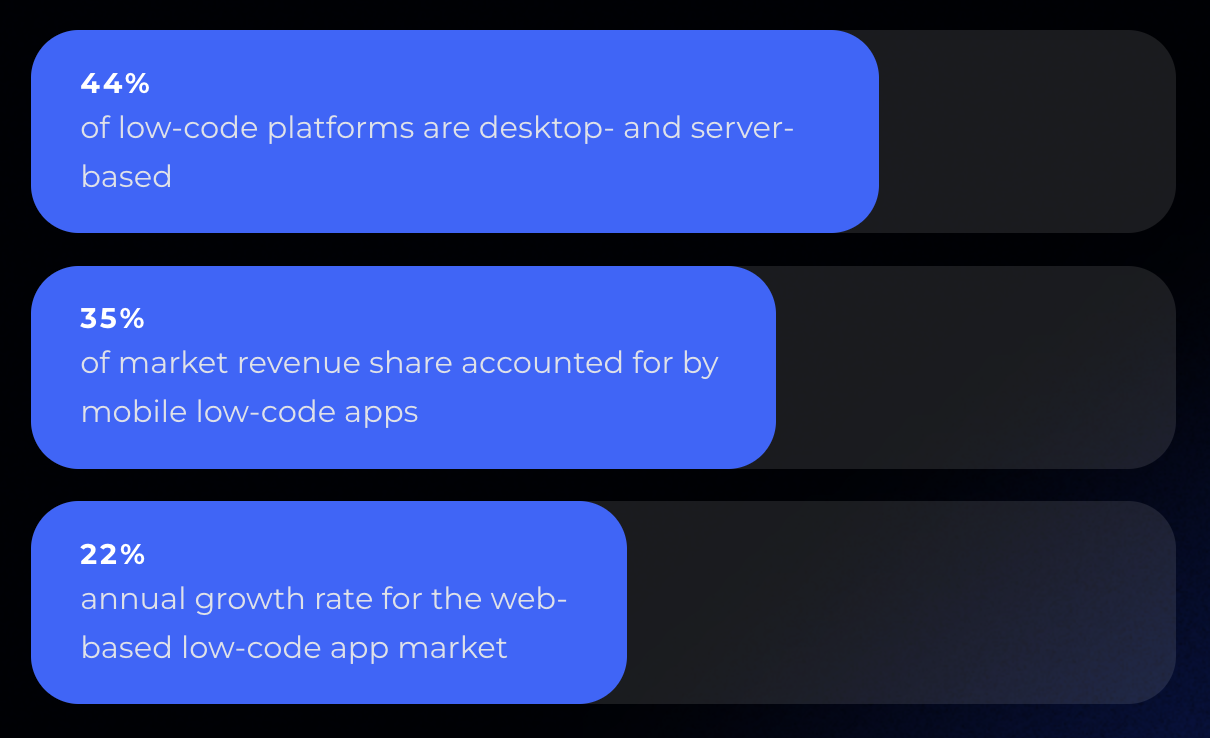
Desktop- and server-based low-code apps continue to dominate the market thanks to low-code’s capability to automate complex business processes. Low code can easily integrate with existing IT solutions, making it particularly attractive for large enterprises.
Cloud and on-premise
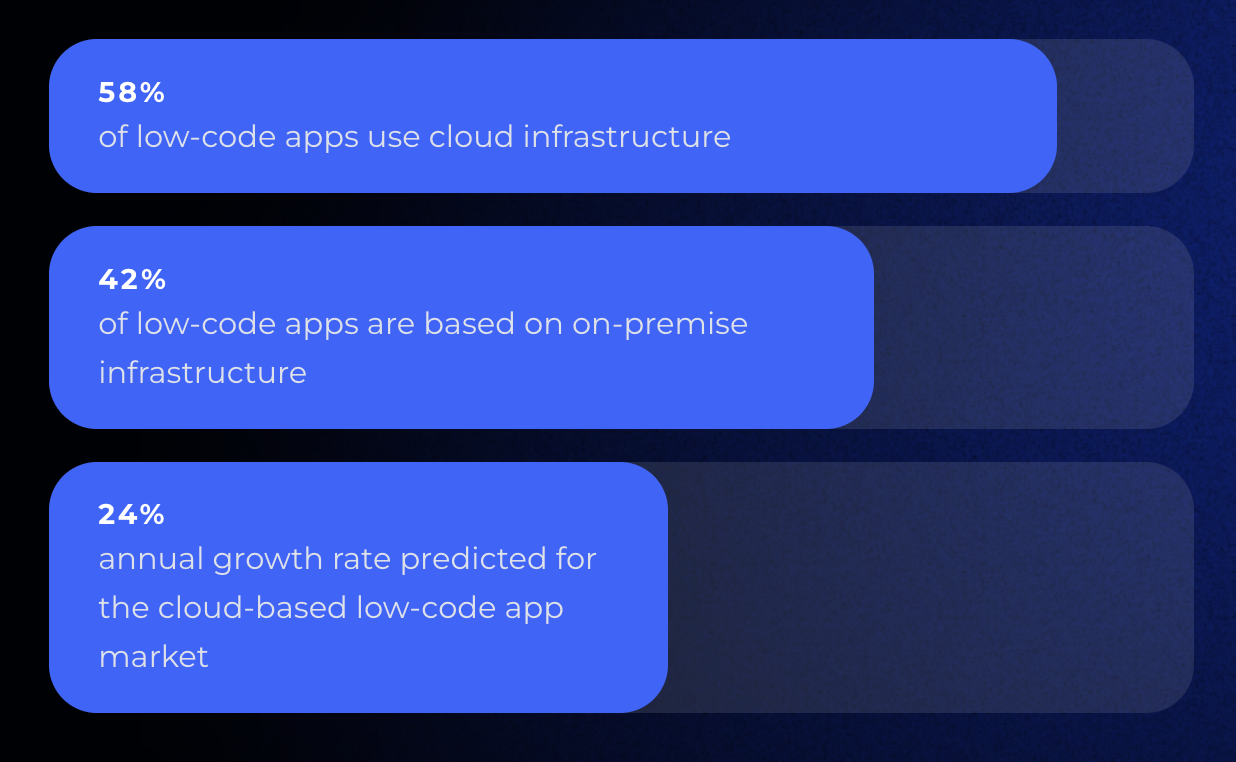
Combined with low code, cloud infrastructure allows businesses to enjoy the benefits of scalability, easy collaboration, and lower costs. It is especially important in the increasingly remote development environment.
Small, medium, and large businesses
Small and medium enterprises are the key users of low-code development platforms. For them, hiring talent and securing resources to build traditional custom software has always been particularly challenging.
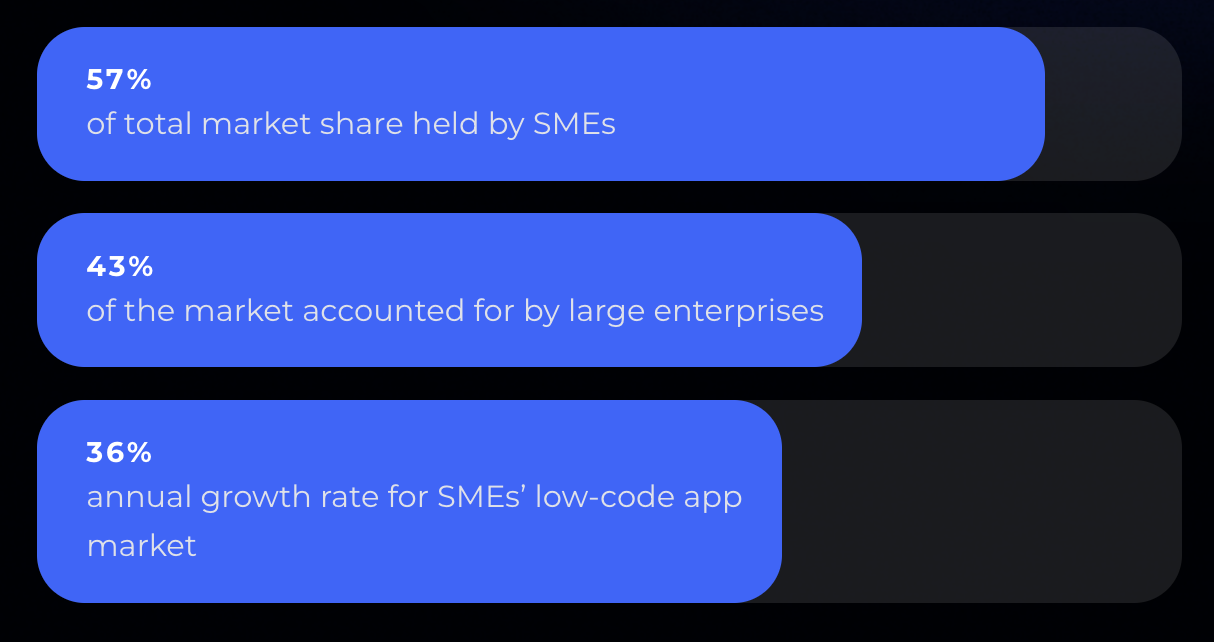
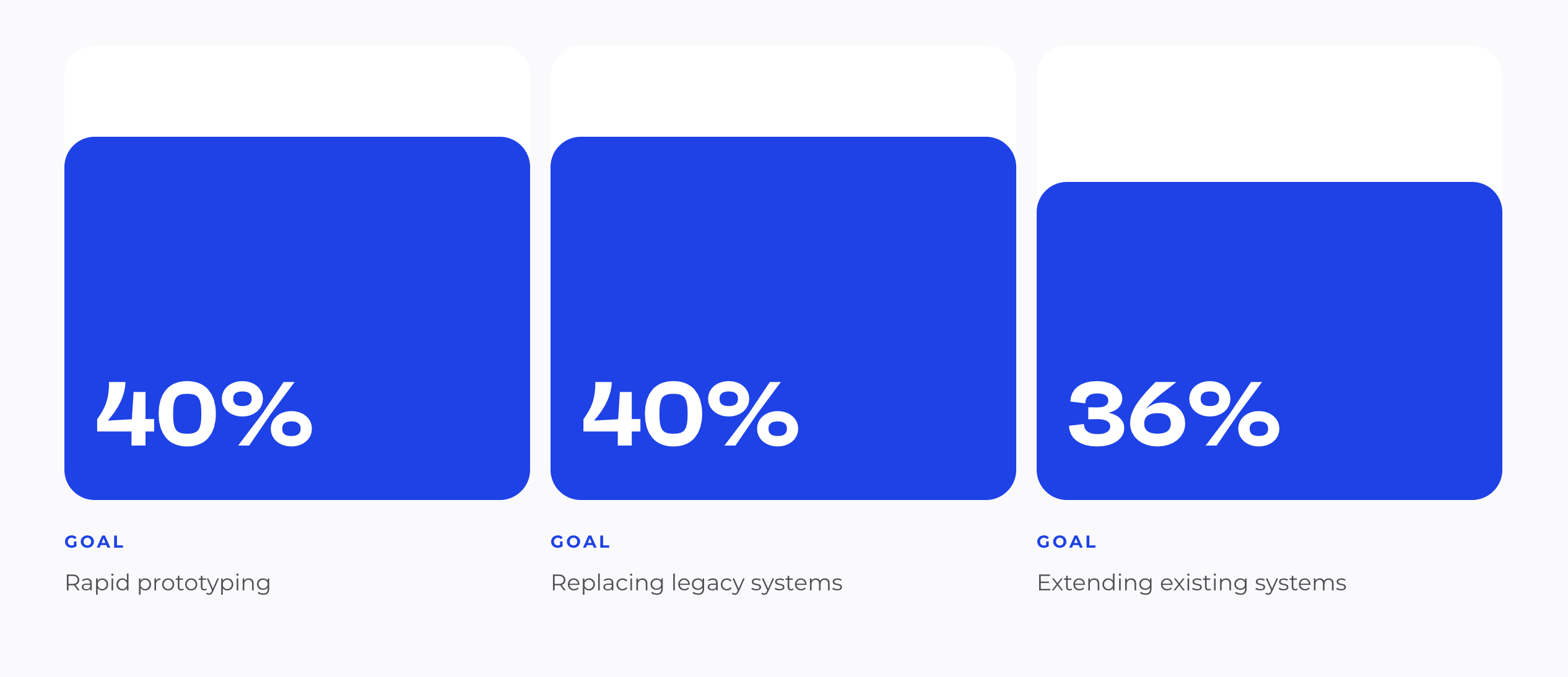
Low code is useful when dealing with tight deadlines or competing priorities in the IT department.
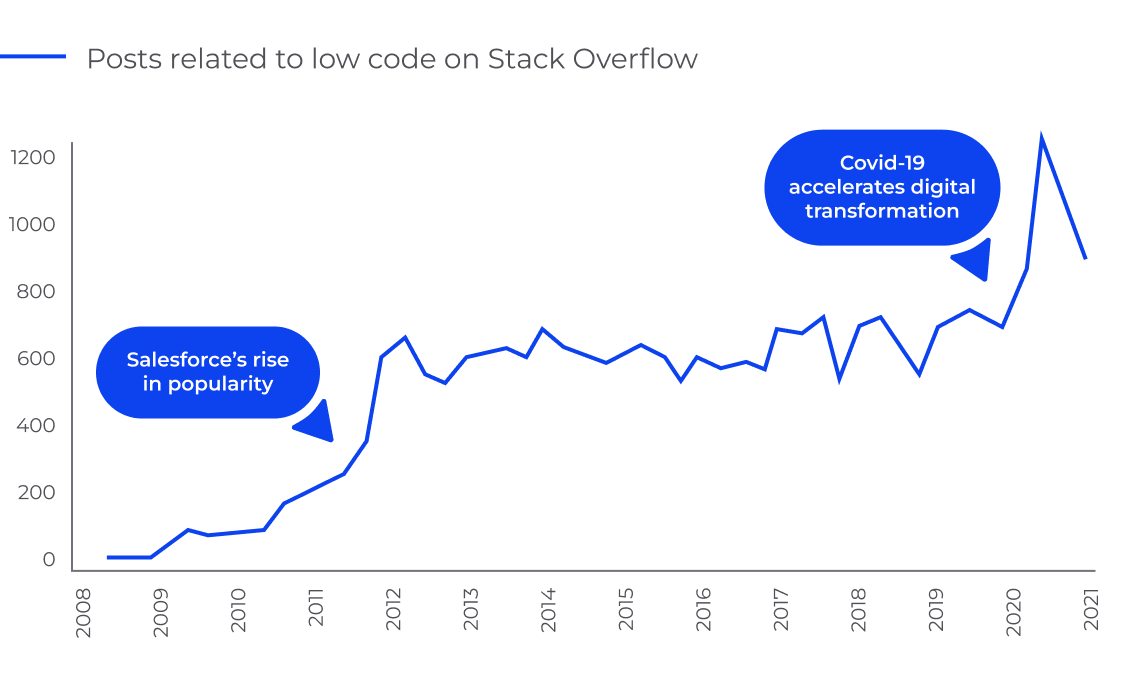
From 2008 to 2021, the number of Stack Overflow posts related to low-code development increased 20-fold.
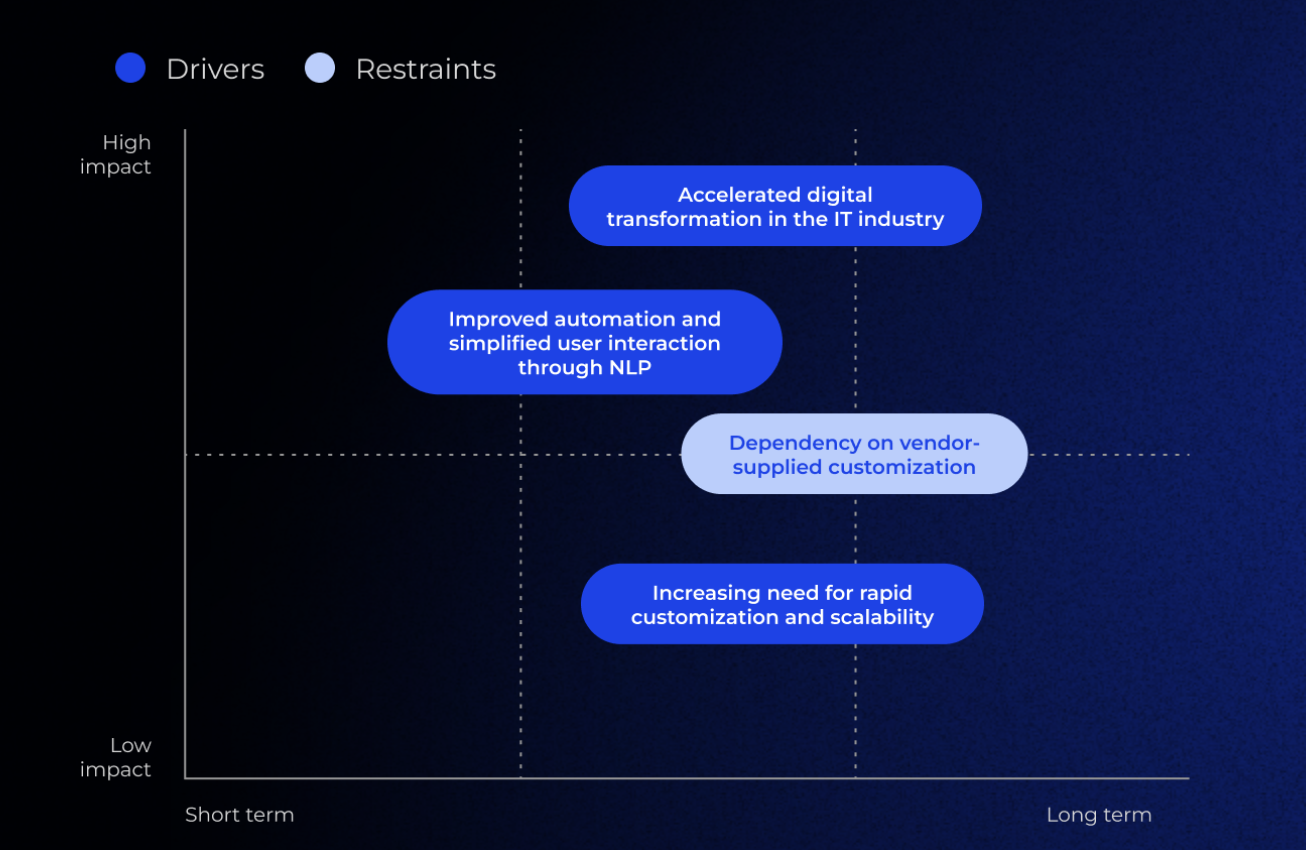
Even though most users find low-code digital transformation beneficial thanks to increased development speed, improved usability, and efficient use of resources, others note drawbacks that can limit low-code adoption.
Despite some predictions, the rise of AI will likely only accelerate low-code adoption.
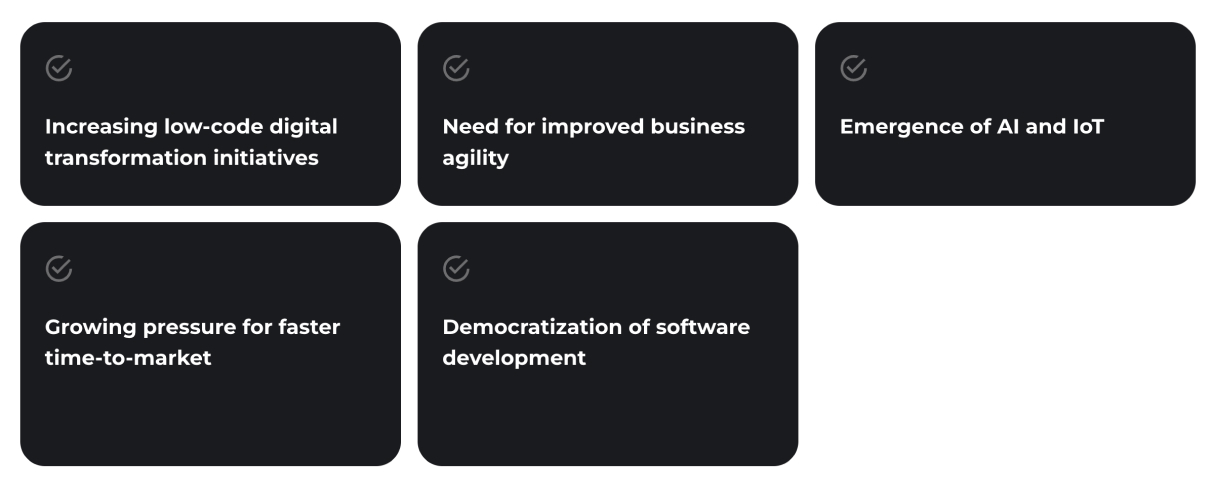
Factors influencing low-code market growth:
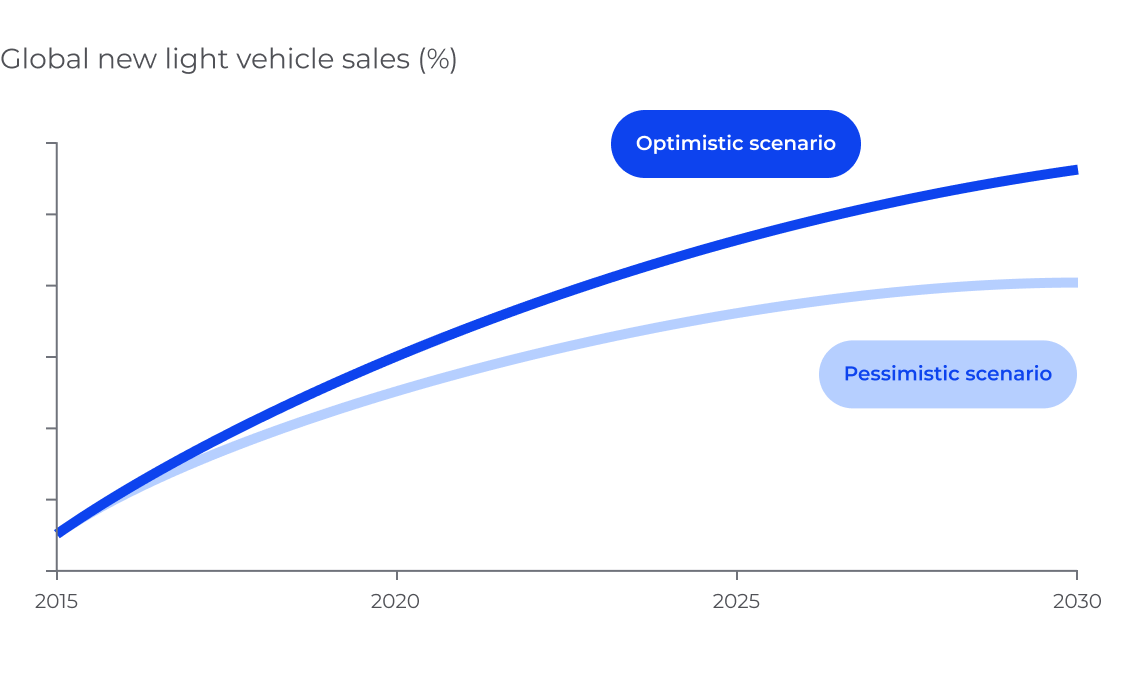
In one scenario, AI-powered low-code platforms dominate the market with a 33% annual growth rate. On the other hand, AI could accelerate and simplify high-code, leading developers to avoid low-code and reducing the market growth rate to 11%.
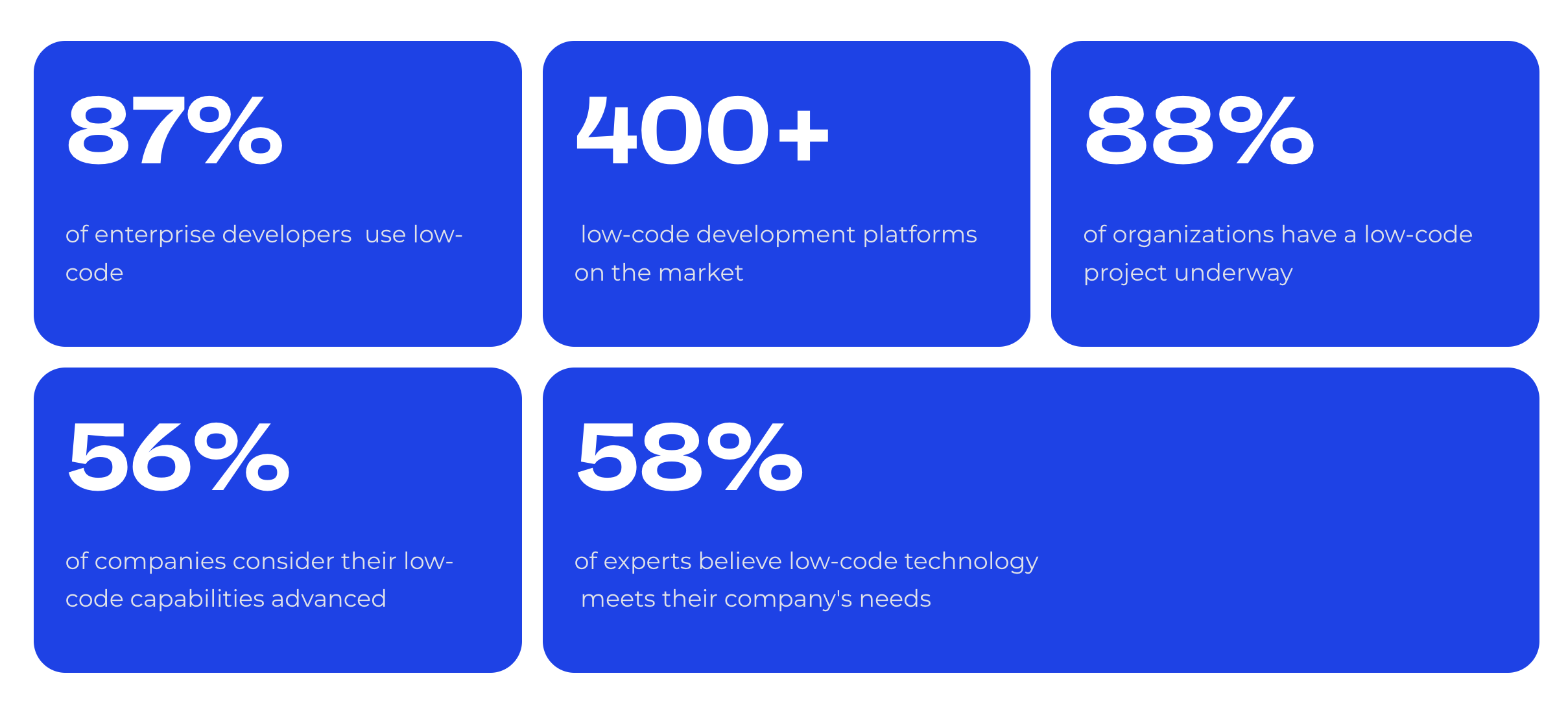
87%

North America
North AmericaNorth American region holds an impressive 34% of the global low-code market share, securing its place as the leading global market. The biggest players driving low-code adoption have a wide presence in the US, including Microsoft, Outsystems, Pegasystems, LANSA, Appian, and Oracle.
Europe
The European low-code market is quickly growing with a 30% compound annual growth rate. Low-code adoption happens quicker in Germany, France, and the UK, will all industries equally involved.
With the tightening of compliance and security regulations, the European low-code market will increasingly search for solutions that meet these new requirements.
Asia-Pacific
Over the next 5 years, the Asia-Pacific low-code adoption is expected to witness an outstanding 31% annual growth rate from 2024 to 2029. Both digital-first economies (e.g. Japan, Australia) and developing countries (e.g. India, Southeast Asia) will adopt low-code solutions for various needs.
Mobile applications and SMEs will drive low-code adoption, with FinTech, retail, and public service organizations taking the lead.
South America
The LATAM market will observe significant low-code adoption growth over the next few years. The biggest economy in the region, Brazil, is leading the way, followed by Argentina, Mexico, Columbia, and Chile.
Each country in the region exhibits its own low-code adoption patterns, but overall, cloud adoption and equal involvement of various industries are becoming a trend.Low-code adoption is particularly noticeable in the financial sector and various startups.
Middle East & Africa
Middle East & AfricaIn the MEA region, the low-code market is especially active in countries such as the United Arab Emirates and Saudi Arabia, further accelerated by government-sponsored digital transformation initiatives.
Sectors leading the low-code adoption include financial, government, and healthcare institutions. Low-code solutions allow businesses in the region to address the pressing skill gap issue and accelerate digital transformation.
IT
The IT sector is the dominant industry in the low-code market with an 18% total market share in 2024. For tech companies, the benefits of low-code adoption are undeniable for both internal and client products. The trend is forecasted to persist, especially with the rise of cloud and hybrid solutions, a growing skill gap, and the need for faster time-to-market.
Healthcare
The healthcare industry’s low-code adoption is anticipated to grow the fastest from 2024 to 2029, with a 32% annual growth rate. The drivers for such growth include the increasing need for remote healthcare services and continuous service delivery even while introducing new software.
Finance
The BFSI sector utilizes low-code development tools to ensure regulatory compliance, accelerate workflow automation, and provide a better customer experience. As FinTech companies challenge traditional banking models, low-code solutions will become invaluable to help detect fraud, automatically process loans, and improve customer support.
E-commerce & retail
Due to ever-growing competition in the e-commerce sector, low-code development platforms can be an efficient way for companies to stand out. Low code enables e-commerce and retail companies to create a personalized shopping experience, utilize AI for product recommendations, and even automate same-day delivery service.
Government & defense
While some organizations in the government and defense sector voice concerns about low-code digital transformation risks, many heavily use these tools. Filing tax forms and permit applications, building self-service portals, and managing logistics are just a few possible benefits of low-code adoption in the industry.
Energy & utilities
Low code enables energy management companies to provide excellent customer support, efficiently manage outages, and create real-time monitoring dashboards. With the industry shift towards IoT-based grid management, renewable energy, and predictive maintenance, low-code adoption has never been so sought-after.
Manufacturing
For manufacturers, low-code adoption can assist with automating production, improving the visibility of their supply chains, and digitalizing production lines. Low code lets organizations connect machines and workers, monitoring performance and predicting maintenance needs. By relying less on traditional coding, the industry players can easily iterate on workflows and automate quality control.
Other Industries
Other industries are also rapidly adopting low-code, from education to logistics and real estate. Explore 24 Low-Code Use Cases to see how companies across different sectors apply these tools in practice.
The world of business and robotic process automation services is complex, and you may have questions. Here’s a list of common inquiries we’ve received from our clients.